- Guided rainforest hiking to find wild mountain gorillas
- Takes place in Uganda’s protected national parks
- Led by trained rangers and guides
- Requires official permits
- Involves walking through forest terrain
- One of the world’s rarest wildlife encounters
- Can be combined with broader Uganda safari itineraries
What Gorilla Trekking Actually Means
Many first-time travelers imagine gorilla trekking as a simple wildlife viewing activity similar to game drives.
It is very different.
Gorilla trekking is an active, immersive wildlife adventure.
Instead of observing animals from a vehicle across open landscapes, you physically enter dense mountain rainforest and track gorilla families on foot.
The process involves following signs of gorilla movement with expert guides until the family is located.
This makes the experience far more emotionally engaging than conventional safari viewing.
Why Gorilla Trekking Is So Special
Mountain gorillas are among the rarest great apes in the world.
They survive only in a limited region of East-Central Africa.
Uganda protects an important portion of the global mountain gorilla population.
What makes gorilla trekking extraordinary:
- rare wildlife access
- close emotional connection
- human-like social behavior
- forest adventure
- strong conservation significance
- once-in-a-lifetime safari appeal
Many travelers consider it the most powerful wildlife encounter on Earth.
Where Gorilla Trekking Happens in Uganda
Uganda’s most famous gorilla trekking destination.
Bwindi is a dense montane rainforest in southwestern Uganda and hosts multiple habituated gorilla families available for tourism.
Why travelers choose Bwindi:
- largest trekking network
- multiple trekking sectors
- excellent lodge range
- easy safari itinerary integration
- globally recognized conservation importance
Uganda’s second gorilla trekking destination.
Smaller, quieter, and dramatically scenic with volcanic landscapes.
Ideal for travelers seeking a more intimate trekking atmosphere.
What Type of Gorillas Do You See?
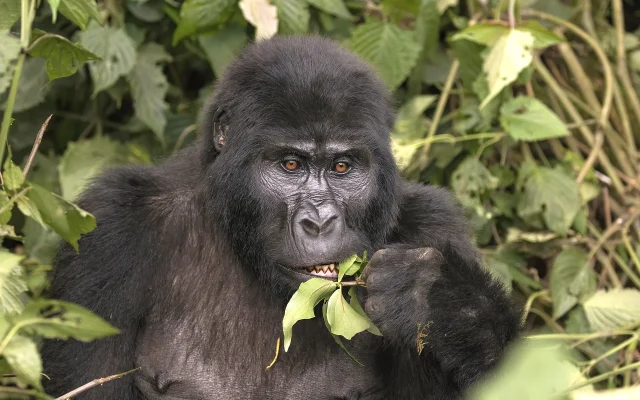
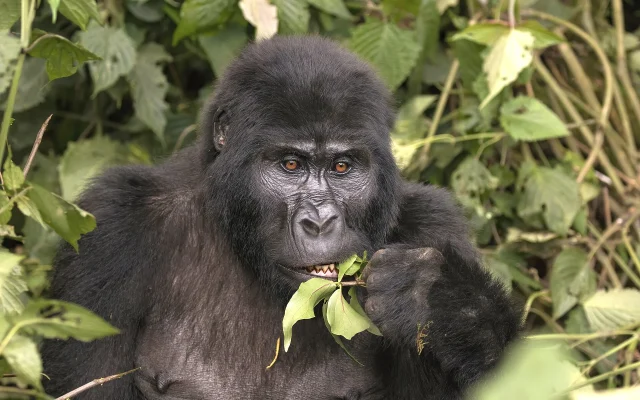
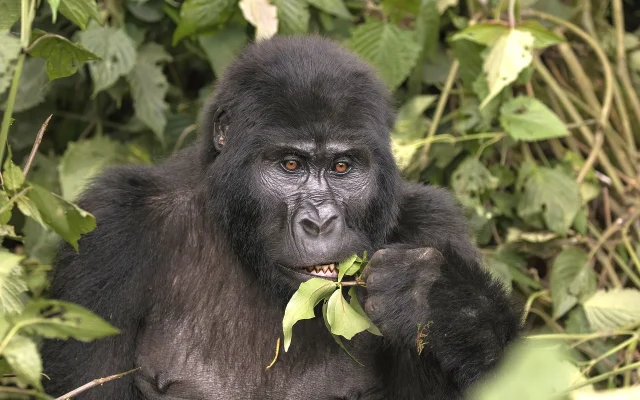
Uganda gorilla trekking focuses on mountain gorillas.
These are distinct from lowland gorilla species.
Mountain gorillas are known for:
- thick dark fur
- adaptation to cooler forest environments
- strong social family structures
- silverback leadership
- remarkable intelligence
Watching their behavior feels deeply personal because of their striking similarity to humans.
How Gorilla Trekking Works Step by Step
Morning Briefing
The day begins with an early park briefing.
Visitors receive instructions, group assignments, and conservation guidance.
Guide Allocation
Professional ranger teams lead each trekking group.
Forest Trek
The trek begins through forest terrain in search of the assigned gorilla family.
Tracking Phase
Guides follow gorilla movement indicators and ranger intelligence.
Gorilla Encounter
Once located, visitors observe the gorilla family under controlled conditions.
Return Trek
After the encounter, the hiking return begins.
How Long Does Gorilla Trekking Take?
Trekking duration varies significantly.
Factors include:
- gorilla movement patterns
- terrain conditions
- weather
- assigned gorilla family location
- group pace
Some treks are relatively manageable.
Others are much more physically demanding.
This unpredictability is part of the adventure.
Is Gorilla Trekking Difficult?
Difficulty depends on conditions and fitness.
Potential challenges include:
- muddy terrain
- steep slopes
- forest humidity
- uneven ground
- altitude effects
However, many travelers of varied ages successfully complete gorilla trekking with reasonable preparation.
How Close Do You Get to Gorillas?
Visitors observe gorillas under tightly managed conservation rules.
This creates one of the most intimate wildlife encounters in the world.
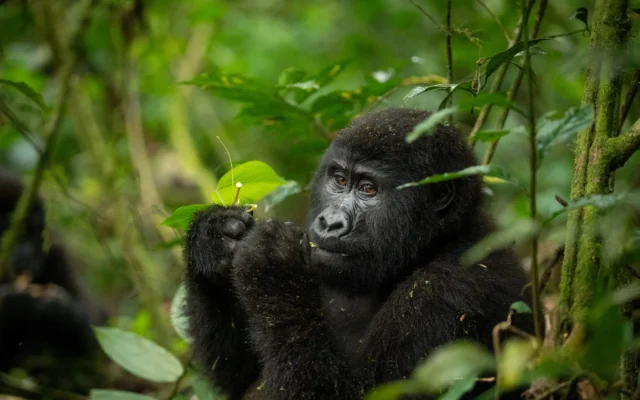
Watching gorillas feed, rest, groom, and interact naturally can be profoundly emotional.
Why Permits Are Required
Gorilla trekking is not open-access tourism.
Permits are required because mountain gorilla tourism is carefully controlled.
Permit systems help manage:
- visitor numbers
- gorilla welfare
- conservation funding
- park operations
- tourism sustainability
Advance planning is essential.
Is Gorilla Trekking Safe?
Yes, when conducted through official tourism systems.
Safety measures include:
- professional ranger leadership
- controlled group sizes
- mandatory briefings
- strict behavioral rules
Mountain gorillas in tourism programs are habituated to regulated human presence, but they remain wild animals.
Best Time for Gorilla Trekking
Gorilla trekking happens year-round.
Seasonal differences affect:
- trail conditions
- rainfall
- trekking comfort
- forest scenery
- visitor density
There is no bad time—only different trekking conditions.
Can Gorilla Trekking Be Combined with Safari?
Absolutely.
This is one of Uganda’s greatest travel advantages.
Gorilla trekking combines exceptionally well with:
Many travelers build full Uganda safari itineraries around gorilla trekking.
Who Should Do Gorilla Trekking?
- wildlife enthusiasts
- primate lovers
- adventure travelers
- photographers
- luxury safari guests
- bucket-list travelers
- repeat safari visitors
- first-time Africa travelers
Why Gorilla Trekking Feels Different from Other Wildlife Experiences
Traditional safaris often create distance between visitor and wildlife.
Gorilla trekking removes much of that emotional separation.
You enter the forest, search actively, and share a rare moment in the gorillas’ habitat.
That immersion makes the experience unforgettable.
Gorilla trekking in Uganda is one of the world’s most extraordinary wildlife experiences.
It combines adventure, conservation, rainforest exploration, and intimate primate encounters in a way few safari activities can match.

 Best
Seller
Best
Seller
 Best
Seller
Best
Seller
 Best
Seller
Best
Seller
 Best
Seller
Best
Seller