Related birding guides
- Birding in Uganda: Complete Guide to Africa’s Premier Birdwatching Destination
- Bwindi Birding Safaris
- Kibale Birding Tours: Discover Uganda’s Premier Forest Birding Destination
- Murchison Falls Birding Tours: Uganda’s Ultimate Savannah and River Birding Safari Destination
- Semuliki Birding Safaris: Explore Uganda’s Most Unique Forest Birding Destination
- All Uganda birding guides →
Queen Elizabeth Birding Safaris offer some of the finest birdwatching experiences in Africa. Located in western Uganda and stretching from the foothills of the Rwenzori Mountains to the shores of Lake Edward, Queen Elizabeth National Park is Uganda’s most biodiverse savannah park and one of the most rewarding destinations for bird enthusiasts. With more than 620 recorded bird species, the park boasts one of the highest bird counts of any protected area in East Africa and attracts birdwatchers from around the world seeking exceptional species diversity within a relatively compact area.
The extraordinary richness of Queen Elizabeth National Park comes from its remarkable variety of habitats. Visitors can explore open savannah grasslands, acacia woodlands, crater lakes, papyrus swamps, river systems, tropical forests, wetlands, and shoreline ecosystems, all within a single safari destination. This habitat diversity supports an incredible range of birdlife, including raptors, waterbirds, forest specialists, migratory species, Albertine Rift endemics, and numerous sought-after African bird species.
Unlike many dedicated birding destinations where wildlife viewing opportunities may be limited, Queen Elizabeth Birding Safaris combine world-class birdwatching with traditional African safari experiences. Birders frequently observe elephants, buffalo, lions, leopards, hippos, crocodiles, antelope species, and primates while searching for rare birds. This combination makes Queen Elizabeth National Park one of the most complete safari destinations in Africa.
Whether you are a serious ornithologist, a wildlife photographer, a casual birdwatcher, or a traveler seeking a broader Uganda safari experience, Queen Elizabeth National Park offers outstanding opportunities to discover some of Africa’s most spectacular birdlife.
Why Queen Elizabeth National Park Is a Birding Paradise
Few destinations in Africa offer the habitat diversity found within Queen Elizabeth National Park.
The park’s varied ecosystems support:
- Savannah bird species.
- Wetland specialists.
- Forest birds.
- Shoreline species.
- Raptors.
- Migratory birds.
- Albertine Rift endemics.
This diversity enables birdwatchers to record exceptionally high species totals during relatively short visits.
Many experienced birders regularly record more than 200 species during a multi-day safari in the park.
Bird Species Found in Queen Elizabeth National Park
The park hosts more than 620 bird species, representing over half of Uganda’s total bird list.
Notable species include:
- Shoebill Stork
- African Skimmer
- Saddle-billed Stork
- Martial Eagle
- Secretary Bird
- Abyssinian Ground Hornbill
- Great Blue Turaco
- Grey Crowned Crane
- Papyrus Gonolek
- African Fish Eagle
- Pink-backed Pelican
- Black Bee-eater
- Verreaux’s Eagle-Owl
- White-winged Warbler
- Malachite Kingfisher
- Black-headed Gonolek
- African Jacana
- Yellow-billed Stork
This remarkable diversity ensures that every birding excursion offers exciting discoveries.
Kazinga Channel: One of Africa’s Best Birding Locations
The famous Kazinga Channel is widely regarded as one of the finest birdwatching locations in Uganda.
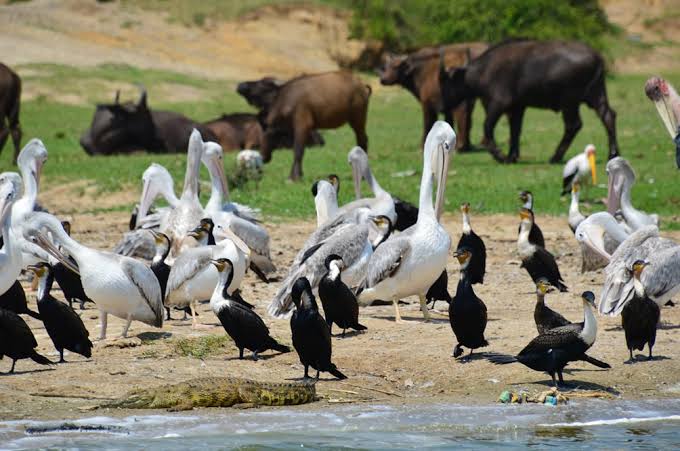
This natural waterway connects Lake George and Lake Edward and supports enormous concentrations of waterbirds throughout the year.
Species commonly observed include:
- Pelicans.
- Herons.
- Kingfishers.
- Storks.
- Cormorants.
- African Fish Eagles.
- Jacanas.
- Skimmers.
The channel’s boat cruises provide exceptional opportunities for close-range observation and photography.
Many visitors consider the Kazinga Channel boat safari the highlight of their birding experience.
Mweya Peninsula Birding
The Mweya Peninsula is one of the park’s most accessible birding areas.
Its mixture of savannah, woodland, and shoreline habitats supports numerous bird species.
Birders frequently encounter:
- Bee-eaters.
- Hornbills.
- Sunbirds.
- Kingfishers.
- Weavers.
- Raptors.
The area also offers excellent opportunities for combining birdwatching with wildlife viewing.
<h2 id=”ishasha-sector-birding-safaris”>Ishasha Sector Birding Safaris
The southern Ishasha sector is famous for its tree-climbing lions, but it is also a productive birding destination.
Birders can observe:
- Black Coucals.
- Crowned Lapwings.
- African Wattled Lapwings.
- Raptors.
- Savannah specialists.
The open grasslands and fig tree habitats support a unique mix of species.
Birdwatchers often combine lion tracking with birding excursions in this sector.
Maramagambo Forest Birding
Located within the national park, Maramagambo Forest provides opportunities to observe forest-associated species rarely found in the savannah sections of the park.
Notable species include:
- Great Blue Turaco.
- Black Bee-eater.
- Forest Flycatchers.
- Greenbuls.
- Forest Hornbills.
The forest significantly increases overall bird diversity and is a valuable addition to dedicated birding itineraries.
Kyambura Gorge Birding Opportunities
The spectacular Kyambura Gorge offers another important birding habitat within Queen Elizabeth National Park.
Its forested environment contrasts sharply with the surrounding savannah and supports a variety of specialized bird species.
Birdwatchers may encounter:
- Turacos.
- Forest Kingfishers.
- Sunbirds.
- Flycatchers.
- Woodland species.
The gorge is also well known for chimpanzee tracking.
Papyrus Swamps and Wetland Birding
Queen Elizabeth National Park contains extensive wetland systems that support numerous papyrus specialists.
Important target species include:
- Papyrus Gonolek.
- White-winged Warbler.
- Papyrus Canary.
- Papyrus Yellow Warbler.
These birds are highly sought after by visiting birdwatchers.
Specialized wetland excursions often produce excellent sightings.
Raptor Watching in Queen Elizabeth National Park
The park is one of Uganda’s premier destinations for birds of prey.
Frequently observed raptors include:
- Martial Eagle.
- Bateleur.
- Tawny Eagle.
- African Fish Eagle.
- Secretary Bird.
- Palm-nut Vulture.
- Augur Buzzard.
Open landscapes and abundant prey populations create ideal conditions for raptor observation.
Bird Photography in Queen Elizabeth National Park
The park offers exceptional bird photography opportunities.
Advantages include:
- Diverse habitats.
- Large bird populations.
- Boat-based photography.
- Open savannah landscapes.
- Excellent lighting conditions.
Photographers often capture both birdlife and large mammals during the same excursion.
The variety of species and habitats makes the park particularly attractive for wildlife photographers.
Best Time for Queen Elizabeth Birding Safaris
Birdwatching is productive throughout the year.
Dry Seasons
- December to February.
- June to August.
These periods provide favorable road conditions and excellent wildlife viewing.
Rainy Seasons
- March to May.
- September to November.
The wetter months often bring increased bird activity, breeding behavior, and migratory species.
Many dedicated birdwatchers prefer these seasons despite occasional rainfall.
Combining Birding with Other Safari Activities
One of the greatest advantages of Queen Elizabeth National Park is the ability to combine birdwatching with numerous other activities.
- Game Drives
- Kazinga Channel Boat Cruises
- Chimpanzee Tracking
- Nature Walks
- Cultural Experiences
- Wildlife Photography
This diversity makes the park ideal for travelers with varied interests.
Accommodation Options for Birders
The park offers accommodations across all budget levels.
Budget Options
- Pumba Safari Cottages.
- Bush Lodges.
- Community Camps.
Midrange Options
- Twin Lakes Safari Lodge.
- Elephant Plains Lodge.
- Buffalo Safari Lodge.
Luxury Options
- Mweya Safari Lodge.
- Kyambura Gorge Lodge.
- Ishasha Wilderness Camp.
Many lodges offer excellent birdwatching directly from their grounds.
Queen Elizabeth Birding Safari Costs
Costs vary according to safari duration, accommodation standards, transportation, and guiding requirements.
Typical price ranges include:
- 1-Day Birding Excursion: USD 150–300 per person.
- 3-Day Birding Safari: USD 600–1,800 per person.
- 5-Day Birding Safari: USD 1,200–4,000+ per person.
Specialized bird guides may increase costs but significantly improve birding success.
Why Book Queen Elizabeth Birding Safaris with Adventure in the Wild Safaris?
At Adventure in the Wild Safaris, we design customized Queen Elizabeth Birding Safaris led by experienced bird guides who understand the park’s habitats, seasonal movements, and target species. Our itineraries are tailored to maximize bird sightings while providing exceptional wildlife viewing, comfortable accommodations, and memorable safari experiences.
Whether you are searching for papyrus specialists, photographing raptors, building a comprehensive Uganda bird list, or combining birdwatching with traditional safari activities, our team can create the perfect birding itinerary for your interests and budget.
With more than 620 bird species, outstanding wildlife, spectacular scenery, and diverse habitats, Queen Elizabeth National Park remains one of Africa’s premier birdwatching destinations and an essential highlight of any Uganda safari.

 Read
Read