Ngorongoro Conservation Area (NCA) is one of Africa’s most extraordinary landscapes — an 8,292 km² UNESCO World Heritage Site on Tanzania’s Crater Highlands where volcanic calderas, short-grass migration plains, montane forest, and semi-nomadic Maasai pastoralism share a single protected ecosystem. Administered by the Ngorongoro Conservation Area Authority (NCAA), the NCA is not a conventional national park: it is a pioneering multiple land-use model where wildlife conservation, tourism, and Maasai livelihoods coexist under World Heritage obligations.
For travelers planning authentic Tanzania wildlife safaris, the NCA delivers far more than a single crater descent — though Ngorongoro Crater remains the crown jewel. The wider conservation area encompasses Ndutu woodlands where wildebeest calving unfolds each year, Olduvai Gorge where hominid fossils rewrote human origins, Empakaai and Olmoti crater hikes on the highland rim, Laetoli’s ancient footprints, and migration corridors linking seamlessly to Serengeti National Park without fences.
Whether you are building a classic Northern Circuit loop from Arusha, timing a calving-season extension at Ndutu, exploring Maasai culture on the highland plains, or pairing savannah wildlife with gorilla trekking in Uganda or Rwanda, Ngorongoro Conservation Area safaris anchor Tanzania’s most celebrated wildlife geography.
This destination combines naturally with Ngorongoro Crater, Serengeti National Park, Olduvai Gorge, Lake Manyara National Park, and Tarangire National Park in a well-planned Tanzania safari route. Travelers building Uganda–Tanzania combinations often pair the NCA with Bwindi Impenetrable National Park or Volcanoes National Park for savannah drama and mountain gorilla trekking in one journey.
From misty Crater Highlands viewpoints to Maasai bomas on open plains, from palaeontology museums at Olduvai to flamingo-fringed alkaline lakes, every corner of the Ngorongoro Conservation Area deepens your connection to East Africa’s natural and human heritage.
Quick Facts About the Ngorongoro Conservation Area
| Feature | Details |
|---|---|
| Location | Ngorongoro District, Arusha Region, northern Tanzania (~180 km west of Arusha) |
| Size | Approximately 8,292 km² (829,200 hectares) |
| Established | 1959 as multiple land-use conservation area |
| UNESCO Status | World Heritage Site since 1979 (natural); Mixed Site since 2010 (natural + cultural) |
| Management | Ngorongoro Conservation Area Authority (NCAA) |
| Key Landscapes | Ngorongoro Crater, Crater Highlands, Ndutu plains, Olduvai Gorge, Empakaai & Olmoti craters |
| Large Mammals | 25,000+ on crater floor alone; millions across wider Serengeti–NCA migration ecosystem |
| Key Species | Black rhino, lion, elephant, buffalo, leopard, wildebeest, zebra, cheetah, flamingo |
| Bird Species | 500+ recorded across the conservation area |
| Human Communities | Semi-nomadic Maasai pastoralists — integrated land-use model |
| Best Time to Visit | Year-round; dry season (June–October) for roads; January–March for Ndutu calving |
| Nearest Gateway | Arusha / Kilimanjaro International Airport (JRO) |
Overview of the Ngorongoro Conservation Area
The Ngorongoro Conservation Area stretches across the eastern shoulder of the Great Rift Valley on Tanzania’s Crater Highlands — a volcanic landscape of collapsed calderas, fertile ash soils, and seasonally grazed short-grass plains that nourish one of Earth’s greatest mammal migrations. UNESCO describes the property as spanning vast highland plains, savanna, savanna woodlands, and forests where wildlife and Maasai pastoralists have coexisted for generations under NCAA stewardship.
Established in 1959 when the Ngorongoro Crater and surrounding highlands were separated from what became Serengeti National Park, the NCA pioneered a multiple land-use model — wildlife conservation and tourism revenue alongside Maasai grazing rights. This framework distinguishes NCAA governance from TANAPA national parks such as Serengeti and Tarangire, shaping everything from entry fees to community coexistence policies UNESCO monitors closely.

UNESCO criterion (viii) recognises the NCA’s outstanding geological features — including Ngorongoro Crater as the world’s largest unbroken caldera, plus Olmoti and Empakaai craters on the highland rim. Criterion (x) highlights globally threatened species — critically endangered black rhino, wild dog, golden cat — and the annual migration of more than one million wildebeest, hundreds of thousands of zebra, and large gazelle populations across the Serengeti–NCA ecosystem. Criterion (iv), added in 2010, honours Olduvai Gorge and Laetoli as among the world’s most important palaeontological records of human evolution.
Geologically, the Crater Highlands formed from volcanic activity associated with the Rift Valley — massive eruptions and collapses over millions of years created the bowl that traps wildlife today and the fertile plains that sustain migration herds. Ash-enriched soils at Ndutu support nutrient-rich grasses critical to wildebeest calving each January–March, while highland forests on outer slopes hold elephants, leopards, and montane birdlife.
The Maasai name Ngorongoro evokes the sound of cowbells or a great bowl — fitting for a landscape where herders graze cattle on rim and plain alongside zebra and wildebeest. Respectful cultural visits to Maasai bomas explain how pastoral livelihoods integrate with conservation mandates — a human dimension rare in fenced national parks.
For safari travelers, the NCA rewards itineraries that look beyond a single crater day. Ngorongoro Crater compresses Big Five drama into one descent; Ndutu delivers calving-season predator spectacles; Olduvai adds deep-time human origins; Empakaai and Olmoti offer guided crater-rim walks away from vehicle congestion. Together they form the essential Northern Circuit context that Serengeti plains alone cannot fully explain.
Why Visit the Ngorongoro Conservation Area?
The NCA stands apart because geology, biodiversity, human heritage, and pastoral culture converge across a single UNESCO-protected highland ecosystem.
UNESCO Mixed World Heritage
Few safari destinations combine natural spectacle with palaeontological significance. The NCA’s 2010 Mixed Site designation recognises both living ecosystems and the fossil record at Olduvai and Laetoli — Louis and Mary Leakey’s discoveries that reshaped understanding of where and how early humans evolved.
Crater Highlands & Ngorongoro Crater
Ngorongoro Crater remains Africa’s most efficient Big Five arena — roughly 25,000 large mammals on a 260 km² floor within natural caldera walls. The wider highlands add Olmoti waterfalls, Empakaai’s flamingo lake, and rim viewpoints where mist pours over volcanic rims at dawn.
Great Migration & Ndutu Calving
The NCA’s short-grass plains at Ndutu host wildebeest calving between roughly January and March — hundreds of thousands of births attracting cheetahs, lions, and hyenas in one of the migration’s most intimate chapters. Herds move freely between NCA and Serengeti; no fences block corridors UNESCO prioritises for conservation.
Maasai Culture & Coexistence
Unlike TANAPA parks excluding permanent human settlement, the NCA integrates Maasai pastoralism. Cultural encounters — when arranged respectfully through licensed operators — explain how cattle, wildlife, and tourism revenue share the same landscape under NCAA regulation.
Olduvai Gorge & Human Origins
Olduvai Gorge museum and gorge viewpoints interpret millions of years of hominid evolution — an essential stop between crater highlands and Serengeti plains.
Northern Circuit Anchor
The NCA sits between Lake Manyara, Tarangire, and Serengeti — the natural hub of Tanzania’s most popular safari loop from Arusha via Naabi Hill Gate.
Top Things to Do in the Ngorongoro Conservation Area
Ngorongoro Conservation Area activities span crater-floor game drives, highland crater hikes, palaeontology visits, calving-season safaris, Maasai cultural encounters, and birding across altitude gradients. NCAA regulations require licensed guides for commercial safaris; crater descents and walking activities follow designated routes and permit systems.
Ngorongoro Crater Game Drives
The defining wildlife experience is a licensed descent onto Ngorongoro Crater floor — typically via Seneto or Lerai routes for rhino search, predator viewing, Lerai Forest elephants, and Lake Magadi flamingos. Most itineraries allocate one full crater day within a broader NCA stay.
Ndutu & Wildebeest Calving Safaris
Between January and March, Ndutu woodlands and short-grass plains within the NCA host peak wildebeest birthing — extraordinary cheetah and lion action on soils that nourish the migration’s next generation. Mobile camps operate seasonally for dedicated calving itineraries.
Visit Olduvai Gorge
The museum and gorge viewpoints at Olduvai Gorge interpret hominid fossils and archaeological layers — a cultural essential on the scenic road between crater highlands and Serengeti.
Empakaai & Olmoti Crater Hikes
Guided walks on the Crater Highlands rim descend into Empakaai’s flamingo-fringed crater lake or visit Olmoti’s waterfalls and grassy caldera — quieter alternatives to congested crater-floor drives, rewarding birders and hikers seeking highland solitude.
Maasai Cultural Encounters
Respectful visits to Maasai bomas on NCA highland plains explain pastoral coexistence within the conservation model — cattle alongside wildlife, traditional housing, and the social fabric NCAA policies aim to sustain.
Laetoli Footprint Site
Near Olduvai, the Laetoli hominid footprint trail — preserved in volcanic ash roughly 3.6 million years old — represents another pillar of UNESCO’s cultural criterion. Access varies; operators coordinate guided interpretation.
Bird Watching & Photography
From montane forest on the rim to soda lakes and migration plains, the NCA supports 500-plus bird species — flamingos, bustards, raptors, and Palearctic migrants between November and April.
Learn more about things to do in Ngorongoro Conservation Area
Wildlife in the Ngorongoro Conservation Area
Ngorongoro Conservation Area wildlife spans confined crater density, open migration plains, and highland forest margins — one of East Africa’s richest mammal assemblages under NCAA protection.
Black Rhino & Big Five
The crater floor is a critical stronghold for eastern black rhino, supported by intensive NCAA monitoring and anti-poaching collaboration. Lion, elephant, buffalo, and leopard complete Big Five possibility — especially concentrated on the caldera floor detailed in our Ngorongoro Crater wildlife guide.
Great Migration Herds
More than one million wildebeest and hundreds of thousands of zebra move seasonally across NCA plains and into Serengeti — UNESCO’s criterion (x) recognises this as among Earth’s greatest mammal migrations. Ndutu calving (January–March) and dry-season herd positioning shape itinerary timing.
Predators & Plains Game
Cheetahs excel on Ndutu short-grass plains during calving season. Lions patrol crater floor and outer grasslands; spotted hyenas compete at kills; leopards haunt highland forest edges. Grant’s and Thomson’s gazelles, eland, hartebeest, and warthog sustain the food web year-round.
Highland & Wetland Species
Elephants traverse forest corridors on outer crater slopes. Hippos occupy permanent pools on the crater floor and river systems. Flamingos concentrate on alkaline lakes including Magadi and Empakaai when conditions align.
Read more about wildlife in Ngorongoro Conservation Area
Bird Watching in the Ngorongoro Conservation Area
With more than 500 species recorded across altitude gradients, bird watching in the Ngorongoro Conservation Area rewards specialist listers and general safari travelers alike.
Notable species include:
- Lesser and greater flamingo on alkaline crater lakes
- Kori bustard and secretary bird on open plains
- Grey crowned crane at wetlands
- Rüppell’s vulture and white-backed vulture on highland thermals
- Fischer’s lovebird in regional woodland
- Livingstone’s turaco in rim forest patches
- Palearctic migrants November–April
Crater-floor drives, Empakaai descents, and Ndutu plain circuits each deliver distinct avifaunas — pair with Lake Manyara for Rift Valley lake specialists on a Northern Circuit birding loop.
Bird watching guide for Ngorongoro Conservation Area
Best Time to Visit the Ngorongoro Conservation Area
The best time to visit the Ngorongoro Conservation Area depends on whether you prioritise dry-season road clarity, Ndutu calving, green-season photography, or shoulder-season value.
Dry Season (June to October)
Peak international tourism aligns with northern summer holidays. Grass shortens on plains and crater floor; wildlife concentrates near water; rim lodges book months ahead. Ideal for first-time safari travelers and Serengeti combinations.
Calving Season (January to March)
Wildebeest calving peaks at Ndutu — combine crater descents with mobile camps for predator action on nutrient-rich short-grass plains. Short rains may bring afternoon showers and dramatic storm light.
Long Rains (April to May)
Fewer vehicles, lower lodge rates, and lush highland scenery reward flexible travelers. Resident crater wildlife remains excellent; 4×4 essential on rim and plain tracks.
Short Rains (November to December)
Shoulder-season value as migratory birds arrive and herds shift toward southern plains. Olduvai museum stops en route to Serengeti without peak-season pressure.
Best time to visit Ngorongoro Conservation Area — full guide
Weather & Climate in the Ngorongoro Conservation Area
The Ngorongoro Conservation Area sits on the Crater Highlands at roughly 1,700–3,000 metres — substantially cooler than lowland parks. Rim mornings feel cold; pack fleece layers for dawn game drives. Rainfall follows bimodal patterns: long rains (April–May) and short rains (November–December). Mist on the rim is atmospheric year-round.
Weather & climate in Ngorongoro Conservation Area
How to Get to the Ngorongoro Conservation Area
Accessing the Ngorongoro Conservation Area is straightforward via Tanzania’s Northern Circuit, though highland roads are winding and NCAA fees apply separately from TANAPA park tariffs.
By Road from Arusha
Road safaris from Arusha reach the crater rim in roughly 4–5 hours (~180 km), often routing via Lake Manyara or Tarangire on multi-park circuits. Naabi Hill Gate connects the NCA to Serengeti for east–west itineraries.
By Air
Most visitors fly into Kilimanjaro International Airport (JRO) and road-transfer to the NCA, or use Lake Manyara airstrip for fly-in safaris with overland connections to rim lodges and Serengeti strips.
NCAA Fees & Permits
NCAA collects conservation fees for NCA entry plus additional crater service charges for floor descents. Licensed operators handle permits, descent timing, and walking activity authorisation.
How to get to Ngorongoro Conservation Area — routes & drive times
Where to Stay in the Ngorongoro Conservation Area
Ngorongoro accommodation clusters on the crater rim, at Karatu on outer slopes, and seasonally at Ndutu for calving itineraries.
Crater Rim Lodges
Luxury and mid-range rim properties position guests minutes from Seneto and Lerai descent gates — ideal for early-morning crater floors.
Karatu & Highland Bases
Karatu town offers coffee-farm lodges and value options roughly 45–60 minutes from crater descent — trading immediate rim sunrise for lower rates.
Ndutu Seasonal Camps
Mobile and permanent camps at Ndutu suit January–March calving safaris combined with crater visits.
Where to stay in Ngorongoro Conservation Area
NCAA, Maasai Coexistence & Conservation
NCAA stewards a uniquely complex mandate: protect biodiversity including critically endangered rhino, manage tourism carrying capacity, uphold Maasai land-use rights, and maintain migration corridors with Serengeti under UNESCO monitoring. Visitors contribute through NCAA fees and responsible practices — staying on designated roads, respecting wildlife distances, and choosing licensed operators who comply with crater descent and walking regulations.
Ngorongoro Conservation Area Safari Tours
Ngorongoro Conservation Area safari tours range from single crater-day additions to multi-day highland experiences with Olduvai, Empakaai, Ndutu calving, and Serengeti extensions.
2 to 3 Day NCA Highlights
Crater descent, rim viewpoints, and Olduvai museum — compact introduction from Arusha.
5 to 7 Day Northern Circuit
Classic Tarangire, Manyara, NCA crater, and Serengeti combination — the definitive Tanzania safari template.
January–March Calving Safari
Ndutu mobile camps plus crater descent for migration birthing and predator spectacles.
NCA & Gorilla Safari Combinations
Pair NCAA Big Five reliability with Bwindi gorilla trekking or Volcanoes gorilla trekking — savannah and rainforest primates in one East Africa arc.
Ngorongoro Conservation Area FAQs
- How many days are ideal for the Ngorongoro Conservation Area?
-
Most travelers find 2 to 4 nights in the NCA ideal — one full crater-floor day at {{LINK:ngorongoro-crater:Ngorongoro Crater}}, rim viewpoints, and Olduvai or Ndutu add-ons. Calving-season itineraries (January–March) need extra nights at Ndutu mobile camps.
- Is the Ngorongoro Conservation Area worth visiting?
-
Absolutely. The Ngorongoro Conservation Area is a UNESCO Mixed World Heritage Site combining crater wildlife, migration plains, Maasai culture, and Olduvai palaeontology — among Tanzania’s most complete Northern Circuit destinations.
- Is the Ngorongoro Conservation Area a UNESCO World Heritage Site?
-
Yes. UNESCO inscribed the NCA in 1979 for natural criteria including the world’s largest unbroken caldera and exceptional biodiversity. In 2010 it became a Mixed Site, also recognising Olduvai Gorge and Laetoli for human evolutionary heritage.
- What is the difference between the NCA and Ngorongoro Crater?
-
The Ngorongoro Conservation Area covers approximately 8,292 km² — crater highlands, Ndutu plains, Olduvai, Empakaai, and Maasai pastoral lands. {{LINK:ngorongoro-crater:Ngorongoro Crater}} is the volcanic caldera within the NCA. Most itineraries include both: the NCA for context and the crater for concentrated Big Five game drives.
- Who manages the Ngorongoro Conservation Area?
-
The Ngorongoro Conservation Area Authority (NCAA) administers the NCA — distinct from TANAPA national parks. NCAA manages conservation fees, crater descents, Maasai land-use coexistence, and anti-poaching including rhino protection.
- Can Maasai people live in the Ngorongoro Conservation Area?
-
Yes. The NCA’s 1959 multiple land-use model integrates semi-nomadic Maasai pastoralism with wildlife conservation — a coexistence framework UNESCO monitors. Respectful cultural visits explain how cattle grazing and tourism share the landscape under NCAA regulation.
- When is the best time to visit the Ngorongoro Conservation Area?
-
Year-round for crater resident wildlife. June–October offers dry-season clarity; January–March pairs crater visits with wildebeest calving at Ndutu on adjoining plains.
- Can I combine the NCA with gorilla trekking in Uganda?
-
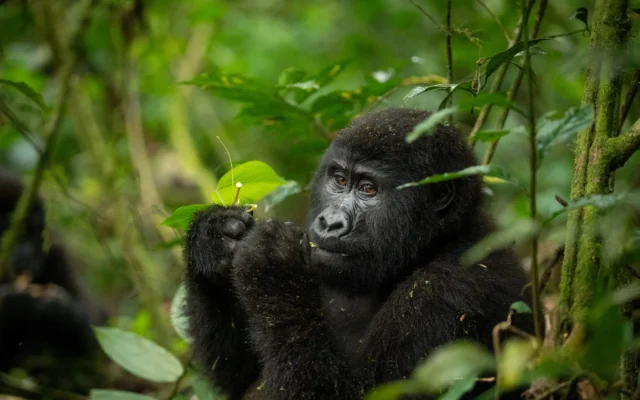
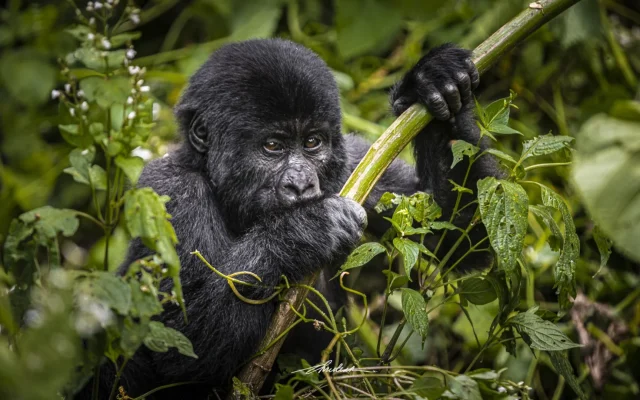
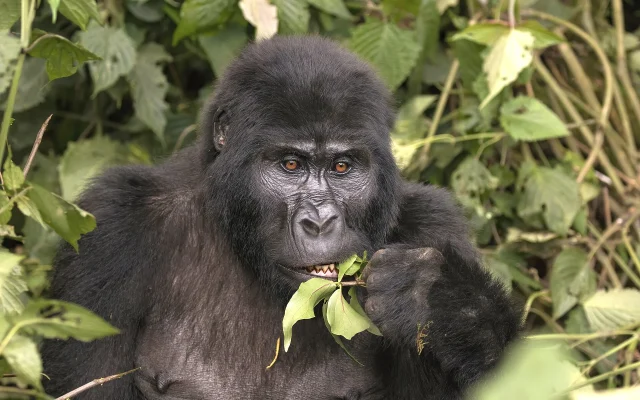
Yes. Mountain gorillas are not in Tanzania, but many travelers combine Ngorongoro Conservation Area safaris with gorilla trekking at Bwindi Impenetrable National Park or Volcanoes National Park via regional flights and coordinated permit dates.
- Is the NCA the same as Serengeti National Park?
-
No. The NCA is NCAA-managed multiple land-use conservation area adjoining Serengeti at Naabi Hill without fences. Serengeti National Park is a separate TANAPA park. Most Northern Circuit itineraries visit both — migration herds move freely between them.
- Is the Ngorongoro Conservation Area safe?
-
Yes. The NCA is a professionally managed UNESCO protected area visited safely through licensed operators, trained guides, and established NCAA regulations on crater descents, walking activities, and wildlife viewing.
Nearby Destinations to Combine with the Ngorongoro Conservation Area
One of the greatest strengths of the Ngorongoro Conservation Area is its position at the heart of Tanzania’s Northern Circuit — within a day’s drive of Serengeti plains, the volcanic caldera itself, palaeontological wonders, Rift Valley lakes, and baobab savannah.
Ngorongoro Crater
The world's largest intact unfilled caldera within the NCA — crater-floor Big Five game drives, black rhino stronghold, and rim photography on the conservation area's defining wildlife stage.
Serengeti National Park
TANAPA's endless plains west of the NCA host the Great Migration, world-class predator viewing, and open savannah — reached via Naabi Hill Gate without fences blocking herds.
Olduvai Gorge
The cradle of humankind within the NCA — hominid fossils, Leakey research heritage, and UNESCO cultural significance on the scenic road between crater highlands and Serengeti.
Lake Manyara National Park
Compact Rift Valley park with groundwater forest, lake flamingos, and tree-climbing lions — a natural Manyara–NCA pairing on the road from Arusha.
Arusha
Tanzania's northern safari capital and gateway from Kilimanjaro International Airport — where most NCA road circuits begin and resupply.
Nearby destinations to combine
Plan Your Ngorongoro Conservation Area Safari
The Ngorongoro Conservation Area remains one of the world’s most rewarding safari landscapes — a UNESCO Mixed Heritage site where NCAA conservation, Maasai heritage, crater drama, migration plains, and human evolutionary history create an experience unlike any other.
Whether you are planning a first Tanzania safari, a calving-season Ndutu extension, a highland hiking add-on, or a Uganda–Tanzania gorilla combination, Ngorongoro Conservation Area safaris deliver the full Northern Circuit story.
From misty Crater Highlands sunrises to Maasai cattle on migration plains, from Olduvai’s fossil galleries to black rhino silhouettes on golden caldera grassland, every day in the NCA deepens your connection to East Africa’s natural heritage.
Our expertly designed Tanzania safari tours can be customised to match your schedule, NCA priorities, travel style, and accommodation preferences.