Wildlife Nile Crocodile

Habitat & range — Nile Crocodile

Nile crocodile habitat spans rivers, lakes, swamps, and floodplain edges across sub-Saharan Africa. In Uganda, the species is most reliably encountered along permanent waterways where boat safaris bring visitors within respectful viewing distance of basking adults and sandy nesting banks.

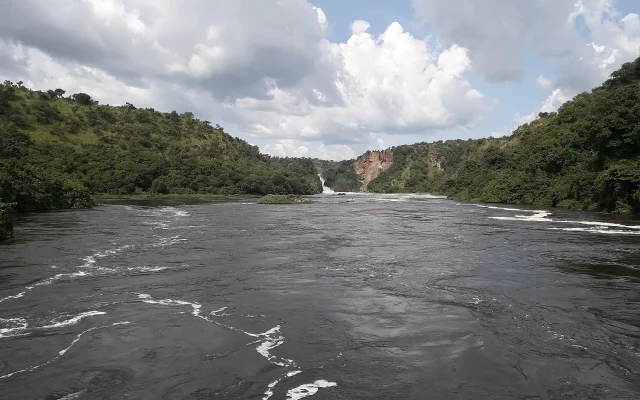
Victoria Nile river habitat with sandy banks where Nile crocodiles bask
Victoria Nile habitat below Murchison Falls — sandy banks, papyrus edges, and deep channels support Uganda’s most famous crocodile boat safaris.

Nile crocodile habitat is defined by permanent water, reliable prey, and sun-exposed banks for thermoregulation. Uganda’s flagship viewing contexts — the Victoria Nile in Murchison Falls National Park and the Kazinga Channel in Queen Elizabeth National Park — deliver all three in concentrations that make boat safaris extraordinarily productive.

What Habitat Do Nile Crocodiles Need?

At its core, Nile crocodile habitat requires:

  • Year-round freshwater or brackish water bodies
  • Shallow shorelines and sandbars for basking
  • Sandy or soft-soil nesting sites above flood level
  • Abundant fish, birds, and mammal visitors at the water’s edge
  • Minimal sustained human disturbance at nest sites

Where these elements overlap, crocodile densities rise — which is why Uganda’s great boat routes feel almost engineered for reptile viewing.

Global Distribution

Crocodylus niloticus ranges across much of sub-Saharan Africa, from the Nile basin and East African lakes to southern river systems. Historically the species reached the Mediterranean coast; today it is most secure in large protected wetlands and rivers with limited hydrological disruption.

Main Habitat Types

Rivers and River Mouths

Flowing rivers provide current, depth variation, and seasonal prey movement. River mouths where tributaries meet lakes concentrate fish and drinking wildlife — prime ambush zones. The Victoria Nile below Murchison Falls is a textbook example: wide channels, grassy islands, and sandbars within a Ramsar-listed wetland complex.

Lakes and Lake Shores

Lakes with shallow bays and reed-fringed margins support basking and nesting. Along the Kazinga Channel — a natural waterway linking Lakes George and Edward — crocodiles exploit both lacustrine and riverine conditions in a single two-hour cruise.

Swamps and Papyrus Fringes

Papyrus and reed beds offer concealment for hunting and refuge for juveniles. Murchison’s delta zone toward Lake Albert combines papyrus labyrinth with open water — excellent for shoebill birding and crocodile spotting on specialized delta cruises.

Floodplains and Seasonal Wetlands

During dry seasons, receding water traps fish and concentrates herbivores at remaining pools. Crocodiles aggregate along shrinking shorelines, improving boat-safari encounter rates — a pattern worth timing via our best time to see guide.

Uganda’s Premier Nile Crocodile Habitats

Victoria Nile, Murchison Falls National Park

The Victoria Nile section within Murchison is Uganda’s most celebrated crocodile habitat for tourists. Research surveys document crocodiles using water (37% of observations), grassy banks, islands, river mouths, and sandy shores (collectively about 47% of habitat use). Basking dominated recorded activity — exactly what afternoon launch passengers see from Paraa.

Key habitat features include:

  • Wide navigable channels for regulated boat traffic
  • Sandbars exposed at moderate water levels
  • Hippo pods creating pathways through vegetation
  • Elephant and buffalo drinking sites — indirect prey attractors
  • Protected status within a major national park

Kazinga Channel, Queen Elizabeth National Park

The Kazinga Channel’s 32-kilometre link between Lakes George and Edward supports dense wildlife along both banks. Warm, relatively sheltered water, plentiful fish, and constant mammal traffic make it one of East Africa’s finest channel ecosystems for crocodile observation from a seated boat deck.

Habitat highlights:

  • Continuous shoreline for basking
  • Fishing village edges with discarded offal — scavenging opportunities
  • Shallow shelves where crocodiles lie submerged with eyes and nostrils visible
  • Mix of open water and embankment vegetation

Microhabitat Preferences

Basking Sites

Crocodiles select sand or mud with unobstructed sun exposure. On the Victoria Nile, single animals or small groups align parallel to the bank — a posture that maximizes surface area for heating. Guides often cut engines to drift past without disturbing thermoregulation.

Nesting Banks

Females prefer sandy substrates above typical flood lines, usually within metres of water for hatchling access. Nesting peaks in drier months; surveys in Murchison recorded heightened nesting visibility from late year into the first quarter — relevant for travelers interested in reproductive behaviour.

Deep-Water Refuges

When disturbed, crocodiles retreat to deeper channels where banks provide cover. The Nile’s plunge-pool sections near the falls are less basking territory than upstream sandbars — itinerary planning usually concentrates launches on the Paraa–falls stretch.

Seasonal Habitat Use

Water level fluctuation reshapes usable bank area. In drier months, shorelines contract and crocodile sightings per kilometre often increase. Wet-season floods may submerge favourite sandbars, pushing animals to alternative sites — still viewable, but less predictable.

Research in Murchison documented sighting peaks in June–August and again January–March, the latter overlapping breeding season. Boat operators adjust departure times to match light and animal activity.

Habitat Interactions with Other Species

Nile crocodile habitat overlaps heavily with hippo territory. Hippos maintain channels through swamp vegetation; crocodiles use those openings. Waterbirds — storks, herons, skimmers — fish the same shallows. Elephants and buffalo reshape banks through trampling and grazing, exposing sand for basking. This multi-species theatre is why Uganda’s boat safaris are never “crocodile only” — yet crocodiles anchor the reptile narrative.

Threats to Habitat

Hydropower dams, irrigation abstraction, agricultural encroachment, and sand mining alter flow regimes and nest substrates. Outside parks, conflict with fishing communities can reduce local abundance even when global status remains Least Concern. Protected corridors like Murchison and Queen Elizabeth buffer these pressures — see conservation for Uganda-specific context.

Why Habitat Knowledge Improves Boat Safaris

Understanding where crocodiles bask, nest, and hunt helps you read the riverbank. That motionless log on a sandbar is thermoregulating. That ripple near a hippo pod may be a submerged adult. That sandy bench above the channel mark could be a nest guard in season. Habitat literacy transforms a scenic cruise into an informed wildlife experience — the standard Uganda Safari Tours aims for on every where to see itinerary.

Planning Habitat-Rich Itineraries

Pair Murchison’s flowing Nile with Queen Elizabeth’s lacustrine channel to compare two habitat types in one trip. Mid-range and luxury routes often schedule both launches within a week. Explore midrange Uganda safaris and crocodile safari experiences, or request a quote for a custom waterway sequence.

Safari packages to see Nile Crocodile

Bookable itineraries below include parks and activities where you are most likely to encounter Nile Crocodile in the wild.

View all packages
7 Day Uganda Wildlife & Gorilla Best Seller

7 Day Uganda Wildlife & Gorilla

7 days

Uganda · Nile, chimps, wildlife & gorillas

You visit

Murchison Falls, Kibale Forest, Queen Elizabeth NP, Bwindi Forest, Entebbe

Seven days with gorillas: the wildlife tour above plus Bwindi trekking on Day 6 — the single most booked private itinerary for Uganda Safari Tours guests who want chimps, savannah and gorillas in one…

3 Day Murchison Falls Safari

3 Day Murchison Falls Safari

3 days

Uganda · Nile boat & Big Five potential

You visit

Murchison Falls, Entebbe

Our classic 3-day Murchison Falls safari follows the park’s most proven circuit: dramatic falls, savannah game drives north of the Nile, and the famous boat trip where the river narrows below the casc…

10 Day Ultimate Uganda Safari

10 Day Ultimate Uganda Safari

10 days

Uganda · Extended flagship circuit

You visit

Murchison Falls, Kibale Forest, Queen Elizabeth NP, Bwindi Forest, Lake Bunyonyi, Entebbe

Our 10-day ultimate Uganda safari distils the country’s greatest hits into a tight, logical loop: rhinos on foot at Ziwa, Nile wildlife at Murchison Falls, chimps in Kibale, savannah and boat safari i…

Get a free quote