Best time to visit Kidepo Valley National Park
Kidepo Valley National Park remains accessible year-round, but season reshapes the experience: how buffalo gather in Narus, how dusty Apoka tracks feel, whether Karamoja overland routes slow after rain, and how comfortably you can photograph lions in golden light before heat haze builds. Treat northeastern Uganda separately from Bwindi or Queen Elizabeth forecasts.
Dry season safari peak
Many operators highlight roughly September to March for wildlife visibility, predator searching on Kidepo Savannah Plains, and predictable road access via Gulu/Kitgum. Heat and dust are the trade-off — early starts are mandatory. Lodge space near Apoka fills for Christmas and international holiday weeks; book flights and rooms together when using Kidepo airstrip.
Green season alternatives
Rainier months — often discussed around April–September depending on year — green the valleys, boost bird activity, and soften light for landscape photography. Wildlife may spread as water becomes more widely available; some tracks challenge 4×4 vehicles. Flexible itineraries beat hour-by-hour schedules.
Fly-in vs overland timing
Fly-in safaris reduce exposure to road seasonality but not to midday heat on drives. Overland travelers through Sipi Falls, Mount Elgon, or Moroto should check each leg's conditions — Kidepo dry while a Karamoja track is muddy is common.
Month-by-month snapshot
Jan–Feb: Hot, dry, excellent game drives; book early.
Mar–May: Transition/rain possible; lush scenery.
Jun–Aug: Rainy peak many years; greener park; road checks essential.
Sep–Oct: Drying improves access.
Nov–Dec: Variable; holiday demand.
Heat illness prevention on drives
Dehydration sneaks up during silent midday waits at sightings — carry more water than Queen Elizabeth habits suggest. Hats, electrolytes, and light long sleeves beat repeated sunscreen application when pop-up roofs stay open all morning.
Lodge booking and flight coupling
Apoka lodge capacity is limited relative to demand in dry peaks — hold rooms when flights confirm. Green-season travelers may find availability but should verify airstrip conditions after rain. Overland guests should align Moroto or Kitgum overnight stops with seasonal track reports.
Photographer vs family season priorities
Families with children may prefer shorter dry-season drives with predictable roads; photographers sometimes accept green-season mud for storm skies. Match month to primary traveler profile in the group.
Combined Karamoja cultural season
Community visit quality in Karamoja Region peaks around market days and dry grazing routes — align cultural extensions with the same seasonal research you use for Narus wildlife.
Wildlife: Kidepo wildlife. Birding: bird watching. Routes: getting to Kidepo.
Campfire wind and dry-season nights
Evenings cool faster than midday heat suggests — pack light fleece for Apoka campfire hours in dry months.
Shoulder month value
March and October transitions sometimes combine workable roads with softer light and fewer vehicles — monitor year-specific road reports before committing.
Wildlife research and collared animals
Occasional research collaring occurs in Kidepo — guides may explain conservation projects if you encounter monitored lions or elephants on drives.
Pack electrolyte sachets for dry-season drives — heat plus dehydration headaches ruin afternoon game loops.
International visitors from winter climates often prefer June–August dry window — pack neutral safari colors and avoid bright clothing on walks.
Photography and heat management by season
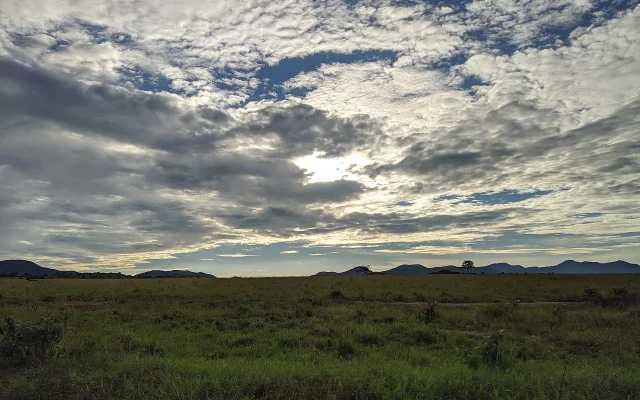
Dry-season photographers on Kidepo Savannah Plains gain dust-filtered golden light at dawn but lose contrast by mid-morning when heat shimmer rises over Narus. Green-season travelers accept softer mammal density in exchange for storm clouds stacking behind Morungole ridges — dramatic for landscape portfolios even when lions require longer searches. Fly-in guests still need seasonal discipline: schedule two pre-breakfast drives during short stays rather than one long afternoon loop when temperatures peak. Combine park timing with Sipi Falls or Mount Elgon only when each leg's road report confirms passable tracks — northeastern Uganda microclimates rarely match Kampala forecasts on the same calendar week.
Holiday peaks and permit pressure
Christmas, New Year, and European summer holidays compress lodge inventory near Apoka faster than Queen Elizabeth or Murchison Falls because supply is limited. Book three to six months ahead for fly-in packages that include charter seats and guided Narus circuits. Shoulder months such as late February or November often deliver strong wildlife with fewer competing vehicles on kopje loops.