Wildlife and forest ecology at Bwindi Impenetrable National Park
Most travelers reach Bwindi Impenetrable National Park for one reason: mountain gorilla trekking. That hour with a habituated family is rightly among Africa's greatest wildlife experiences. Yet the park's wildlife story extends far beyond primates. Covering roughly 331 square kilometers of ancient montane rainforest in southwestern Uganda's Albertine Rift, Bwindi protects one of the continent's most biologically dense forests — a place where steep slopes, mist, and thick vegetation create habitat for gorillas, chimpanzees, forest elephants, hundreds of birds, and thousands of plant and insect species.
The forest is estimated to be more than 25,000 years old, surviving climatic shifts that altered vegetation across much of Africa. That continuity explains why Bwindi feels so layered: giant trees, tangled vines, moss-covered branches, and a sense of depth that open savannah parks such as Queen Elizabeth National Park cannot replicate. Wildlife here is quiet, forest-focused, and often glimpsed briefly — a colobus crossing overhead, a duiker in undergrowth, elephant sign on a muddy trail.
Mountain gorillas and the wider primate community
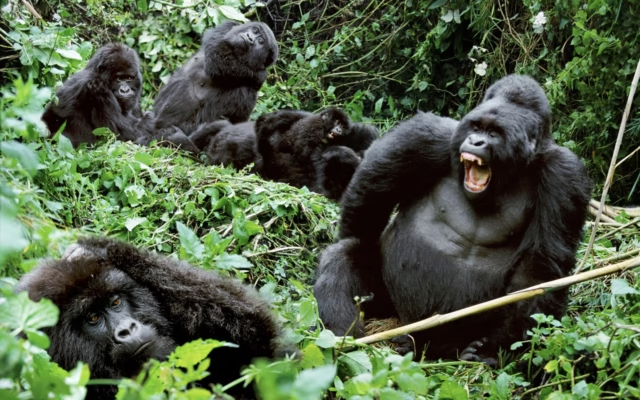
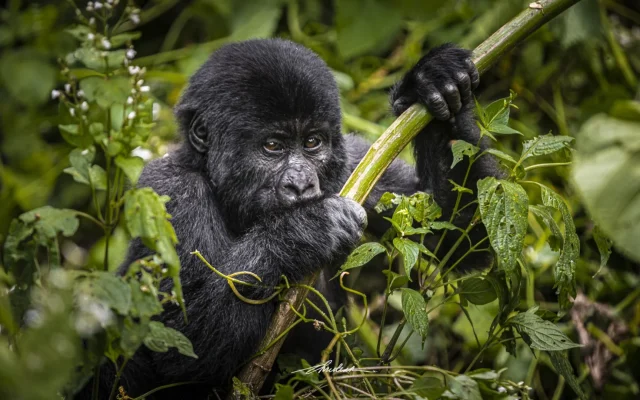
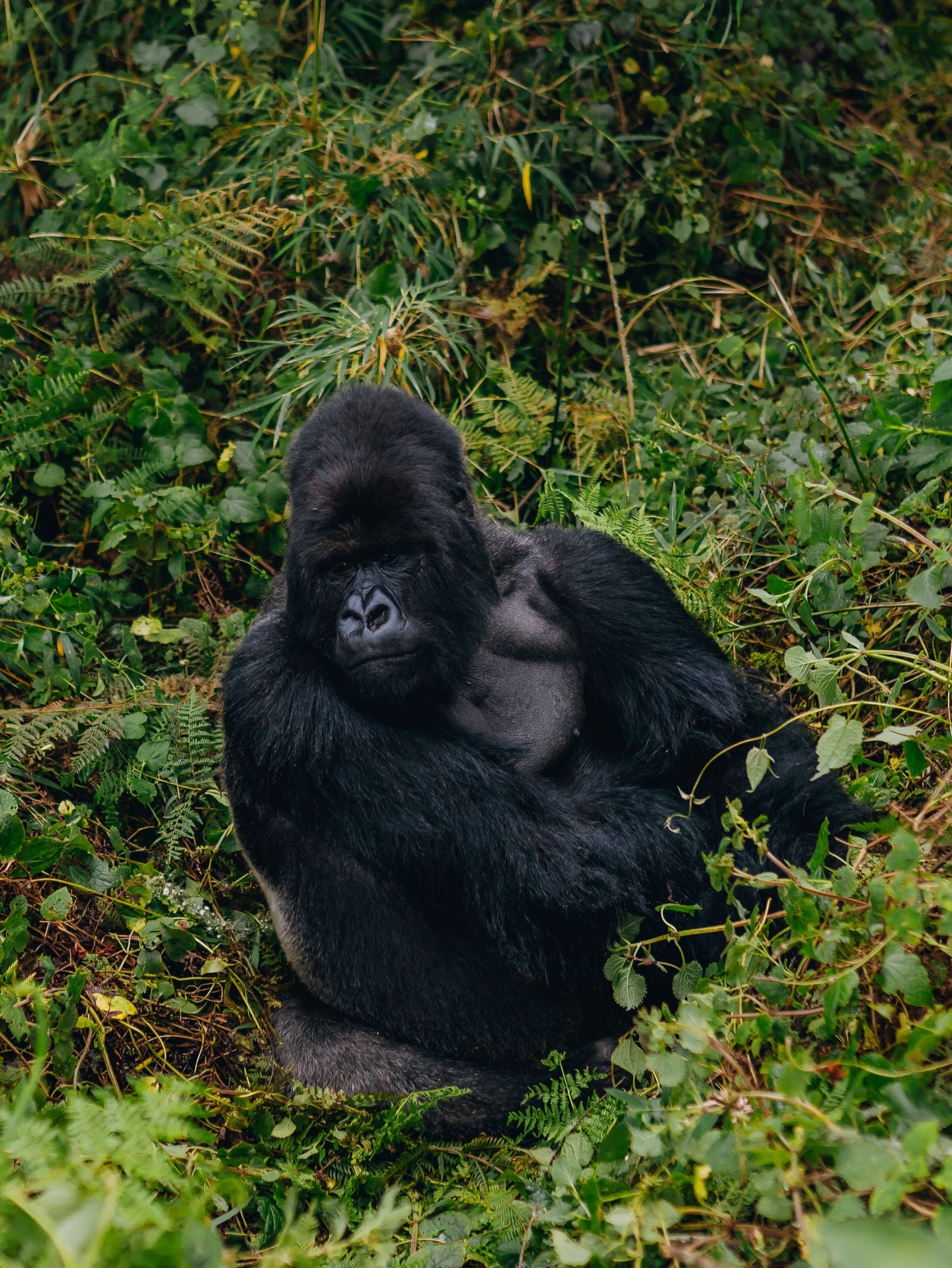
Bwindi wildlife is inseparable from gorilla conservation. The park hosts roughly half of the world's remaining mountain gorillas, divided across habituated families in four trekking sectors: Buhoma, Rushaga, Ruhija, and Nkuringo. Standard trekking allows about one hour with a habituated group; the exclusive Gorilla Habituation Experience in Rushaga offers extended time with semi-habituated gorillas under researcher protocols.
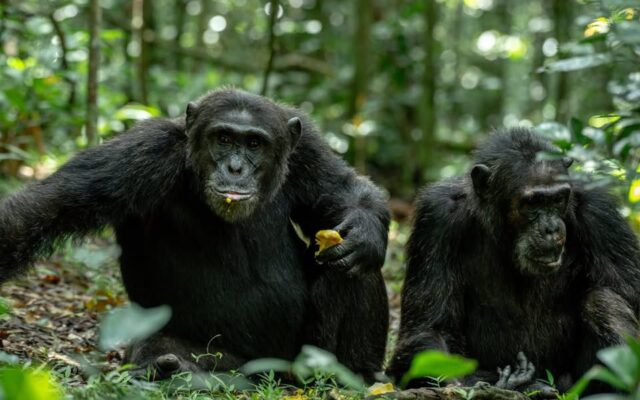
Beyond gorillas, primates include chimpanzees — though Bwindi is not Uganda's primary chimp destination compared with Kibale National Park — plus black-and-white colobus, L'Hoest's monkey, blue monkey, red-tailed monkey, and olive baboon in forest margins. Primate density is a reason serious wildlife travelers stay multiple nights: each dawn walk can surface different species even when gorilla permits dominate the calendar.
Forest elephants, hogs, and shy mammals
Forest elephants occur in Bwindi though sightings are uncommon and often indirect — fresh dung, broken saplings, deep prints in mud. Giant forest hog, bush pig, various duikers, and sitatunga in suitable wetland margins round out the mammal list. Leopards and servals are present but rarely seen. Compared with Murchison Falls game drives, Bwindi mammal viewing rewards patience and guide knowledge on forest trails, not open-plains scanning.
Photographers often value indirect signs: butterflies on trail edges, fungi on decaying wood, and the sudden stillness when a guide signals primate movement above. The forest teaches a different safari rhythm — less checklist adrenaline, more reading of sound and movement in humid air.
Birds, butterflies, and smaller forest life
Bwindi holds more than 350 bird species and exceptional butterfly diversity. Albertine Rift endemics and near-endemics attract global birders — African green broadbill, Shelley's crimsonwing, and Grauer's rush warbler are among the sought-after names. Even casual visitors notice colorful turacos, barbets, and sunbirds along lodge gardens and forest edges.
Reptiles, amphibians, and invertebrates complete the ecological picture. A guided nature walk without a gorilla permit still reveals medicinal plants, stream frogs, and forest ecology that many trekkers miss when focused only on briefing times. See our bird watching at Bwindi page for species-focused planning.
Four sectors, four wildlife contexts
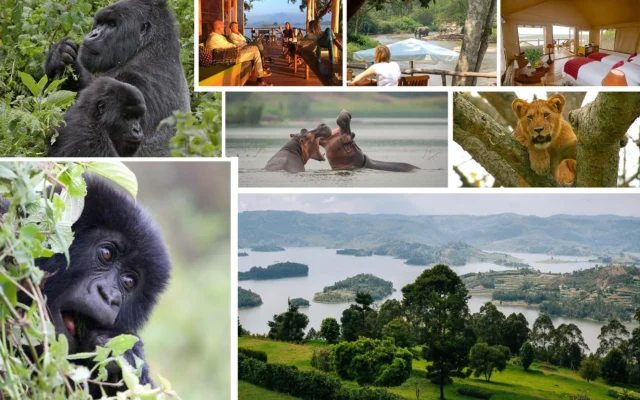
Buhoma in northern Bwindi offers the most established tourism infrastructure and classic forest trekking. Rushaga in the south has the highest number of habituated gorilla families and habituation experiences. Ruhija in the east is cooler, quieter, and especially strong for birders. Nkuringo on steep southern ridges delivers dramatic scenery and tough trekking terrain. Wildlife is broadly similar across sectors, but elevation, forest type, and visitor pressure shape daily encounters — lodge location should match your assigned trekking sector, not only lodge marketing photos.
Communities and conservation at the forest edge
Bwindi is not an isolated wilderness. Communities including the Batwa and Bakiga surround the park. Historically the Batwa lived as forest hunter-gatherers; eviction and conservation zoning created complex social histories now addressed through community tourism, revenue-sharing, and cultural experiences. Responsible wildlife tourism employs local porters, guides, and lodge staff — practical conservation income that reduces pressure on forest resources.
Visitors should treat cultural encounters with respect: choose community-led Batwa experiences rather than superficial performances, ask before photographing people, and understand that gorilla fees fund both protection and local development. Pair forest wildlife with authentic cultural programming documented on our hub and Batwa cultural experience resources where relevant.
Responsible wildlife viewing
Follow Uganda Wildlife Authority rules on gorilla distance, voice level, and health screening — respiratory illness can threaten gorillas. Never litter on trails, do not touch plants or animals, and avoid flash photography near primates. Porters are not optional luxury on steep sectors; they support local livelihoods and improve trek safety. Ethical viewing protects habituated families and keeps Bwindi viable for the next traveler.
How Bwindi fits a wider Uganda safari
Most itineraries anchor two to three nights in Bwindi for gorilla permits, optional forest walks, and birding. Natural combinations include Queen Elizabeth savannah safaris, Kibale chimp tracking, Lake Bunyonyi relaxation, and Mgahinga Gorilla National Park volcano trekking. Bwindi is the rainforest climax many Uganda routes build toward.
For deeper planning, see our guides on Bwindi Impenetrable National Park bird watching, best time to visit, and getting there.