Explore this species across our habitat guide, where to see page, and safari planning resources - plus parks such as linked destinations.
Unlike forest predators such as leopards that rely heavily on concealment in dense cover, lions thrive in open and semi-open ecosystems where visibility, prey concentration, cooperative hunting, and territorial control provide ecological advantages.
Understanding African lion habitat helps explain why lions became Africa’s dominant large predator and why safari travelers associate lions so strongly with classic wilderness landscapes.
This guide explores where African lions live, habitat types, ecological adaptations, territorial behaviour, Uganda lion ecosystems, and conservation habitat challenges.
Where Do African Lions Live?
African lions occur across parts of sub-Saharan Africa in protected ecosystems where sufficient habitat, prey populations, and predator-supporting ecological conditions remain.
Historically lions occupied much broader ranges, but modern distribution is significantly reduced due to habitat loss and human pressures.
Today, lions survive mainly in protected landscapes.
Countries with African Lion Populations
Lions occur in various African countries, though densities and tourism relevance vary.
Key safari lion destinations include:
- Uganda
- Kenya
- Tanzania
- Botswana
- South Africa
- Zambia
- Zimbabwe
- Namibia
Uganda remains one of East Africa’s strongest lion safari destinations.
Where Lions Live in Uganda
Queen Elizabeth National Park
Queen Elizabeth National Park is Uganda’s premier lion habitat.
This ecosystem offers:
- Classic savannah landscapes
- Strong prey populations
- Open hunting environments
- Predator-friendly ecological conditions
Ishasha Sector
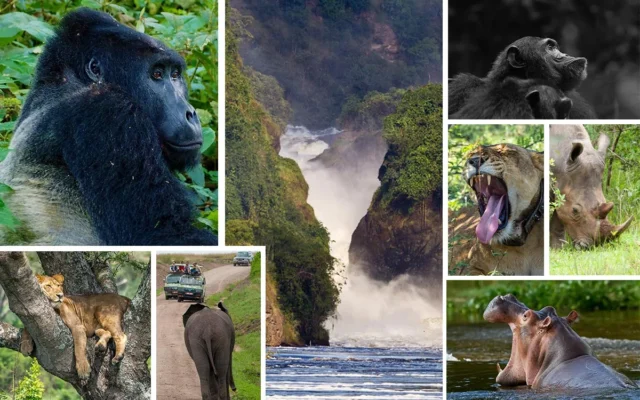
The Ishasha sector is world famous for tree-climbing lions.
Habitat here combines:
- Open plains
- Scattered fig trees
- Savannah grassland
- Prey-rich ecosystems
This unique habitat supports one of Africa’s most unusual lion populations.
Murchison Falls National Park
Murchison offers expansive lion habitat across northern savannah ecosystems.
Habitat characteristics:
- Open plains
- Woodland savannah
- River systems
- Abundant prey habitat
Kidepo Valley National Park
Kidepo provides one of Uganda’s wildest lion habitats.
This dramatic remote landscape offers exceptional predator ecology.
Main African Lion Habitat Types
1. Savannah Grasslands
This is the most iconic lion habitat.
Features include:
- Open visibility
- Grass cover for stalking
- High prey abundance
- Suitable predator movement space
Savannah ecosystems strongly favor cooperative lion hunting.
2. Open Woodland
Lions also thrive in open woodland systems.
Benefits include:
- Shade
- Ambush cover
- Resting areas
- Prey support
3. Floodplains
Floodplain systems can support high prey density and attractive predator conditions.
4. Semi-Arid Habitat
Some lion populations occupy harsher dry ecosystems where prey availability permits survival.
5. Mixed Savannah Ecosystems
Many lion habitats combine multiple ecological features.
What Makes Good Lion Habitat?
Lions require specific ecological conditions.
Prey Availability
Healthy prey populations are essential.
Without prey, lions cannot survive.
Open Hunting Conditions
Lions depend on stalking and coordinated hunting.
Visibility and terrain strongly influence hunting success.
Water Access
Water systems support both lions and prey populations.
Territory Space
Lions require sufficient territory for:
- Hunting
- Pride movement
- Cub rearing
- Male territorial control
Reduced Human Pressure
Human conflict greatly reduces habitat viability.
Habitat and Hunting Relationship
Habitat shapes lion hunting strategy.
Open savannah environments allow:
- Cooperative stalking
- Prey positioning
- Ambush timing
- Short explosive attack opportunities
Habitat and Social Behaviour
Lion habitat helps explain pride living.
Open ecosystems with large prey favor social cooperation.
Advantages include:
- Cooperative hunting
- Cub protection
- Territory defense
- Resource sharing
Territorial Range
Lions maintain territories that vary depending on habitat quality and prey abundance.
Territory function includes:
- Resource control
- Breeding access
- Prey access
- Pride security
Tree-Climbing Lion Habitat
Ishasha’s tree-climbing lions occupy one of Africa’s most distinctive lion habitats.
Habitat characteristics include:
- Large climbable fig trees
- Open hunting plains
- Warm daytime conditions
- Prey-rich surroundings
This habitat may help explain unusual climbing behaviour.
Habitat Adaptations
Camouflage
Lion coloration blends effectively with dry grassland environments.
Powerful Build
Supports close-range predator performance.
Social Hunting Behaviour
Adapted to prey-rich open systems.
Night Vision
Critical for low-light hunting success.
Habitat and Cubs
Cubs depend on habitat safety.
Important factors include:
- Shelter
- Reduced disturbance
- Prey access for mothers
- Pride stability
Habitat Threats
Habitat Loss
Expansion of agriculture and settlement reduces lion habitat.
Fragmentation
Broken habitat reduces territory viability and prey movement.
Human Conflict
Conflict with livestock and communities increases habitat pressure.
Prey Decline
Without prey, habitat becomes functionally unsuitable.
Protected Lion Habitats in Uganda
- Queen Elizabeth National Park
- Ishasha sector
- Murchison Falls National Park
- Kidepo Valley National Park
Uganda Lion Habitat Comparison
Queen Elizabeth
- Best overall lion habitat
- Classic safari ecology
- Strong prey support
Ishasha
- Unique tree-climbing habitat
- Iconic tourism value
Murchison
- Expansive predator habitat
- Strong safari ecosystem
Kidepo
- Remote wilderness habitat
- Exceptional predator atmosphere
Climate and Lion Habitat
Lions adapt well to warm African climates, but habitat productivity depends on rainfall, prey ecology, and vegetation dynamics.
Conservation Importance of Habitat
Habitat protection is essential for lion survival.
Key priorities:
- Protected areas
- Corridor preservation
- Conflict reduction
- Prey conservation
Interesting Habitat Facts
- Savannah is classic lion habitat
- Uganda has tree-climbing lion habitat
- Prey determines habitat suitability
- Lions need large protected ecosystems
- Open landscapes favor cooperative hunting