Explore this species across our habitat guide, where to see page, and safari planning resources - plus parks such as linked destinations.
Watching lions in the wild reveals far more than simple predator power. A safari may reveal affectionate pride interactions, strategic stalking behaviour, territorial roaring, cub play, dominance displays, coordinated hunting, or the surreal sight of Uganda’s tree-climbing lions resting in fig trees.
This guide explores African lion behaviour in detail, including pride dynamics, communication, hunting, cub care, territoriality, aggression, intelligence, and daily life.
Lions Are the Only Truly Social Big Cats
One of the defining features of lion behaviour is social living.
Unlike:
- Leopards (solitary)
- Tigers (solitary)
- Most other major cats
Lions live in organized family groups called prides.
This social structure gives lions behavioural advantages unavailable to solitary predators.
Pride Structure
A pride is the core social unit of lion life.
A pride may include:
- Adult lionesses
- Cubs
- Subadults
- Coalition males
Pride size depends on habitat, prey availability, reproductive success, and territorial conditions.
Why Lions Live in Prides
Social living offers major survival benefits.
- Cooperative hunting
- Cub protection
- Territory defense
- Shared vigilance
- Resource efficiency
Female Lion Behaviour
Lionesses form the stable social core of most prides.
Behaviour roles include:
- Hunting
- Cub care
- Territorial participation
- Social bonding
- Defensive behaviour
Female social relationships are fundamental to pride stability.
Male Lion Behaviour
Adult males play distinct roles in lion social systems.
Key behaviours include:
- Territorial defense
- Coalition cooperation
- Dominance competition
- Pride protection
- Reproductive competition
Coalition Behaviour
Male lions often cooperate in coalitions.
Coalitions may involve:
- Brothers
- Closely associated males
Benefits include:
- Stronger territorial defense
- Improved pride takeover potential
- Shared competition burden
Dominance Behaviour
Lion society includes hierarchy and competition.
Dominance influences:
- Territory access
- Reproductive opportunity
- Feeding order
- Social interactions
Communication Behaviour
Lions use multiple communication systems.
Roaring
Roaring is one of the most iconic lion behaviours.
Functions include:
- Territory declaration
- Pride location communication
- Coalition coordination
- Threat signaling
- Social contact
Body Language
Lions communicate through posture and physical signalling.
Examples:
- Dominance stance
- Submission behaviour
- Aggression posture
- Relaxed social positioning
Facial Communication
Facial expression contributes to social signalling.
Tactile Communication
Touch is important in pride relationships.
Examples:
- Nuzzling
- Head rubbing
- Physical contact bonding
- Cub reassurance
Social Bonding Behaviour
Pride cohesion depends on social reinforcement.
Bonding behaviours include:
- Resting together
- Physical affection
- Greeting rituals
- Cooperative association
Hunting Behaviour
African lions are strategic predators.
Hunting combines power, stealth, timing, and often cooperation.
Cooperative Hunting
Unlike solitary cats, lions frequently hunt together.
Advantages:
- Larger prey capture
- Strategic positioning
- Shared effort
- Higher success potential
Common Hunting Strategies
- Ambush stalking
- Flanking prey
- Driving prey into position
- Night hunting
- Short explosive attacks
Why Lionesses Often Hunt
Female lions frequently lead coordinated hunting activity because of pride structure and cooperative roles.
Feeding Behaviour
Feeding can involve hierarchy and competition.
Behaviour may include:
- Food competition
- Protective feeding
- Dominance assertion
- Cub opportunism
Territorial Behaviour
Lions defend territory actively.
Territory provides:
- Prey access
- Pride security
- Breeding opportunity
- Resource control
Territorial Behaviours
- Roaring
- Patrolling
- Scent marking
- Boundary response
- Coalition defense
Aggression
Aggression is a natural behavioural component of lion ecology.
Triggers include:
- Territory disputes
- Dominance competition
- Food conflict
- Threat response
- Pride defense
Cub Behaviour
Lion cubs are playful, curious, and behaviourally developmental.
Common behaviours:
- Play fighting
- Stalking practice
- Sibling interaction
- Social testing
- Exploration
Play Behaviour
Play helps cubs develop:
- Coordination
- Predatory instincts
- Social understanding
- Confidence
Maternal Behaviour
Lionesses are highly protective mothers.
Maternal roles:
- Nursing
- Protection
- Guidance
- Defensive aggression
- Cub supervision
Collective Cub Care
In pride systems, communal support may strengthen cub survival.
Resting Behaviour
Lions spend substantial time resting.
This conserves energy for:
- Hunting
- Territory defense
- Movement
- Social activity
Activity Timing
Lions are often more active during cooler periods.
- Dawn
- Dusk
- Night
Tree-Climbing Behaviour
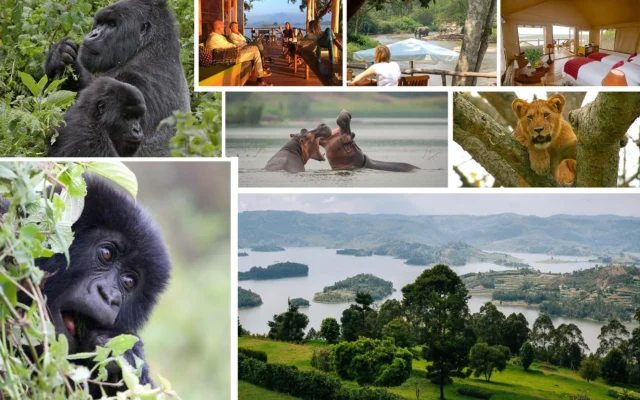
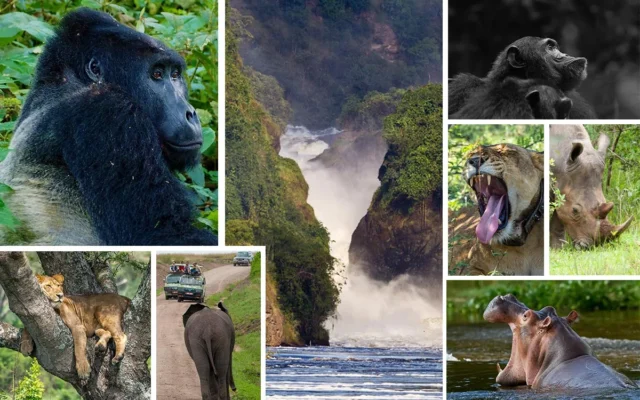
Uganda’s Ishasha lions are globally famous for climbing trees.
Possible behavioural explanations:
- Cooling
- Insect avoidance
- Comfort
- Observation advantage
- Behavioural tradition
Learning Behaviour
Young lions learn through:
- Observation
- Play
- Practice
- Pride interaction
Intelligence
Lions demonstrate behavioural intelligence through:
- Strategic hunting
- Social recognition
- Territorial judgement
- Adaptive predator decisions
Daily Behaviour Cycle
Morning
- Movement
- Social interaction
- Post-hunt rest
Midday
- Heavy resting
- Shade use
- Low activity
Evening
- Increased alertness
- Movement
- Social coordination
Night
- Hunting
- Patrolling
- Roaring
Behaviour During Safari Encounters
Visitors may observe:
- Resting prides
- Cub play
- Roaring males
- Territorial movement
- Tree-climbing behaviour
- Feeding activity
Behaviour Myths
Myth: Male Lions Do All the Hunting
Reality: Lionesses frequently perform much of the hunting.
Myth: Lions Are Always Aggressive
Reality: Lions spend much time resting and socializing.
Myth: Tree Climbing Is Normal for All Lions
Reality: This is unusual and region-specific.
Interesting Behaviour Facts
- Only social big cat
- Use cooperative hunting
- Roar territorially
- Tree climbing occurs in Uganda
- Cubs learn through play
- Coalition males cooperate