Explore this species across our habitat guide, where to see page, and safari planning resources - plus parks such as linked destinations.
Unlike many big cats, lions are highly social animals with organized family groups, coordinated hunting strategies, dramatic territorial behaviour, and complex interactions between males, females, and cubs. Their roaring calls, cooperative hunting, and dominant presence make them one of the most compelling animals to observe in the wild.
This guide explores the most fascinating African lion facts, covering biology, social life, hunting, intelligence, ecology, and extraordinary adaptations.
Quick African Lion Facts
- Scientific name: Panthera leo
- One of the world’s largest big cats
- Member of the Big Five
- Africa’s apex predator
- Only truly social big cat
- Lives in prides
- Roars can travel long distances
- Lions are obligate carnivores
- Uganda has famous tree-climbing lions
- Lions require active conservation protection
1. Lions Are the Only Truly Social Big Cats
One of the most remarkable lion facts is their social lifestyle.
Unlike:
- Leopards (solitary)
- Cheetahs (mostly independent)
- Tigers (solitary)
Lions live in organized social groups called prides.
This makes them unique among major cats.
2. A Lion Family Is Called a Pride
A pride may include:
- Adult females
- Cubs
- Subadults
- Coalition males
Pride size varies depending on habitat, prey availability, and territory conditions.
3. Male Lions Grow Manes
The lion’s mane is one of the most distinctive features in the animal kingdom.
Mane variation depends on:
- Age
- Genetics
- Health
- Environment
Some manes are dark and massive, while others are lighter or less developed.
4. Lions Are Huge Cats
African lions rank among the world’s largest felines.
Adult males are significantly larger than females and built for power rather than agility alone.
5. Female Lions Do Much of the Hunting
One of the most famous lion facts is that lionesses frequently lead hunting activity.
Advantages include:
- Cooperation
- Coordination
- Efficiency
- Specialized teamwork
6. Lions Hunt Cooperatively
Unlike solitary predators, lions often hunt as teams.
Strategies may include:
- Ambush positioning
- Flanking
- Driving prey
- Night coordination
7. Lions Are Apex Predators
Lions sit at the top of the food chain in many African ecosystems.
This makes them ecologically important regulators of prey populations.
8. Lions Are Carnivores
Lions are obligate carnivores.
They depend entirely on animal protein for survival.
9. Lions Eat Large Mammals
Typical prey may include:
- Buffalo
- Uganda kob
- Antelope
- Warthog
- Zebra
- Young herbivores
10. Lions Are Powerful Rather Than Built for Endurance
Lions rely on explosive acceleration, ambush strength, and powerful takedowns.
11. Lions Spend Much of the Day Resting
Conserving energy is essential for large predators.
Lions may spend extensive hours resting between activity periods.
12. Lions Are Most Active in Cooler Periods
Activity commonly increases:
- Early morning
- Evening
- Night
13. Lion Roars Are Legendary
Lions produce some of the most powerful vocalizations in the wild.
Roaring functions include:
- Territory declaration
- Pride communication
- Intimidation
- Coordination
14. Lion Cubs Are Vulnerable
Despite their future strength, cubs face major risks.
Threats include:
- Predation
- Starvation
- Male takeover events
- Disease
15. Lionesses Are Exceptional Mothers
Lionesses protect, nurse, and defend cubs within pride structures.
16. Male Lions Form Coalitions
Males often cooperate in coalitions, especially related males.
This helps with:
- Territory defense
- Dominance retention
- Pride access
17. Lions Defend Territory
Territory is central to lion survival.
Territorial defence includes:
- Roaring
- Patrolling
- Scent marking
- Conflict response
18. Lions Recognize Social Relationships
Lions demonstrate social intelligence through pride interactions and coalition relationships.
19. Cubs Learn Through Play
Play develops:
- Coordination
- Hunting skills
- Social behaviour
- Confidence
20. Lions Can Climb Trees
While not as naturally arboreal as leopards, lions can climb.
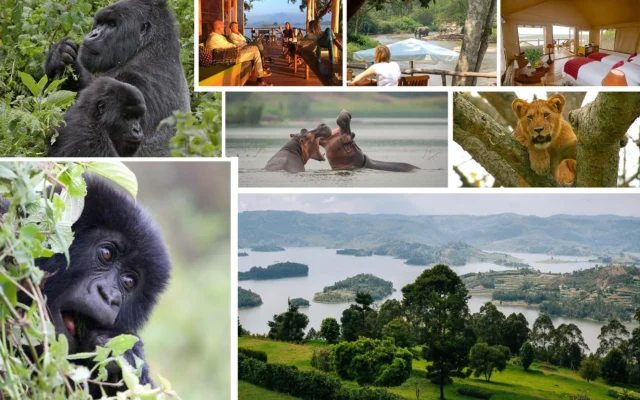
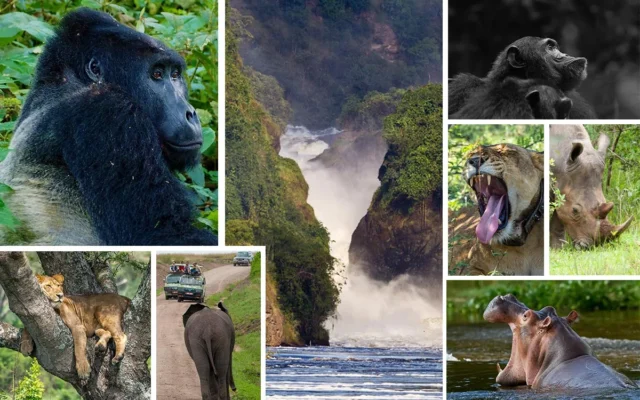
Uganda’s Ishasha lions are world famous for this behaviour.
21. Uganda Has Tree-Climbing Lions
Queen Elizabeth National Park’s Ishasha sector is one of Africa’s most famous lion attractions.
22. Why Lions Climb Trees Is Still Debated
Possible explanations:
- Cooling
- Avoiding insects
- Visibility advantage
- Behavioural tradition
23. Lions Are Highly Intelligent Hunters
Strategic hunting requires timing, teamwork, and environmental awareness.
24. Lions Have Excellent Night Vision
Low-light capability supports nocturnal hunting effectiveness.
25. Lions Use Ambush Strategy
They usually rely on stealth and close-range attack rather than prolonged pursuit.
26. Female Lions Stay in Prides Longer
Females often remain within natal pride systems, supporting long-term social continuity.
27. Male Tenure Can Be Temporary
Male dominance periods may be unstable depending on competition.
28. Lions Influence Ecosystem Balance
As apex predators, lions help regulate prey populations.
29. Lions Face Serious Conservation Threats
Major pressures include:
- Habitat loss
- Human conflict
- Fragmentation
- Poaching-related threats
- Prey reduction
30. Lions Are a Core Safari Attraction
Lions remain one of Africa’s most commercially important wildlife species.
31. Lions Are Big Five Animals
The African lion is one of the iconic Big Five safari animals.
32. Lions Can Be Dangerous
As apex predators, lions are powerful wild animals that demand respect.
33. Lion Social Life Is Complex
Prides involve hierarchy, competition, cooperation, and family structure.
34. Cubs Depend on Pride Stability
Stable pride conditions improve survival prospects.
35. Lions Are Among Africa’s Most Photogenic Animals
Golden light, mane detail, pride interactions, and predator drama make lions extraordinary photography subjects.
Interesting Lion Fact Summary
- Only social big cat
- Apex predator
- Big Five member
- Uganda has tree-climbing lions
- Cooperative hunters
- Powerful roarers
- Strategic predators