African lion — Uganda safari guide for travelers planning wildlife encounters.
Introduction
Explore this species across our habitat guide, where to see page, and safari planning resources - plus parks such as linked destinations.
The African lion is one of the most iconic wildlife species on Earth. Revered as the king of the savannah, feared as a powerful apex predator, and celebrated as one of Africa’s greatest safari attractions, lions symbolize wilderness, strength, and raw natural power. Few wildlife encounters compare to seeing a lion pride resting beneath an acacia tree, hearing a distant roar at dawn, or watching coordinated hunting behaviour unfold on the African plains.
For safari travelers, the African lion remains one of the most sought-after animals to see in the wild. As a member of the famous Big Five, lions represent the heart of the classic African safari experience. Yet beyond their dramatic reputation lies a remarkably sophisticated social predator with complex behaviour, strategic hunting intelligence, strong family structures, and vital ecological importance.
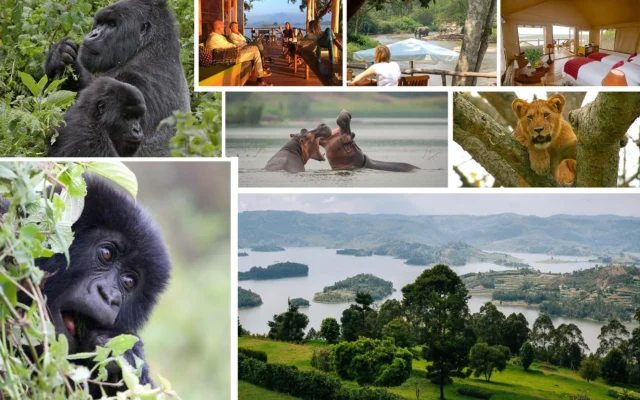
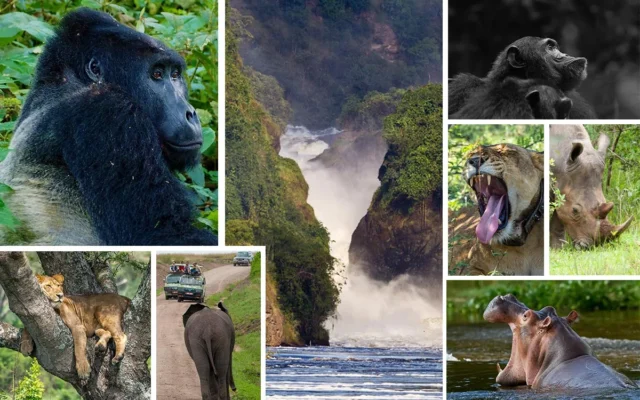
Uganda offers exceptional lion safari opportunities, including one of Africa’s most famous specialist lion experiences—the extraordinary tree-climbing lions of Ishasha in Queen Elizabeth National Park.
This complete African lion guide explores biology, habitat, behaviour, hunting, conservation, safari experiences, and where to see lions in Uganda and across Africa.
What Is an African Lion?
The African lion (Panthera leo) is one of the world’s largest big cats and Africa’s dominant apex predator across many ecosystems. Lions are unique among big cats because they are highly social animals, living in organized family groups known as prides.
Unlike leopards, which are solitary, or cheetahs, which rely on speed, lions combine strength, social cooperation, territorial dominance, and strategic hunting.
The African lion is one of the most recognized wildlife species globally and remains central to African safari tourism.
Scientific Classification
- Kingdom: Animalia
- Phylum: Chordata
- Class: Mammalia
- Order: Carnivora
- Family: Felidae
- Genus: Panthera
- Species: Panthera leo
Physical Characteristics
Size
African lions are among the largest cats in the world.
Adult males are substantially larger than females and may exceed 180 kilograms under natural conditions, while females are lighter and more agile.
Mane
The lion’s mane is one of its most distinctive features.
Males possess impressive manes that vary in:
- Color
- Density
- Length
- Darkness
Mane development may reflect age, genetics, health, and environmental conditions.
Body Design
Lions possess:
- Powerful forelimbs
- Muscular shoulders
- Strong jaws
- Retractable claws
- Excellent night vision
- Exceptional predatory strength
Where Do African Lions Live?
African lions occupy a range of habitats across sub-Saharan Africa.
Habitat types include:
- Savannah grasslands
- Open woodland
- Semi-arid ecosystems
- Floodplains
- Scrubland
- Mixed savannah ecosystems
Uganda supports important lion populations within protected safari ecosystems.
Where to See Lions in Uganda
Queen Elizabeth National Park
Queen Elizabeth National Park is Uganda’s premier lion destination.
Highlights:
- Strong lion safari reputation
- Ishasha tree-climbing lions
- Classic savannah game drives
- Excellent predator ecosystem
Ishasha Sector
Ishasha is globally famous for tree-climbing lions.
This unusual behaviour makes Uganda one of Africa’s most distinctive lion safari destinations.
Murchison Falls National Park
Murchison offers excellent classic lion safari experiences in expansive savannah ecosystems.
Kidepo Valley National Park
Kidepo offers remote wilderness lion encounters in dramatic northern Uganda landscapes.
Why Are Some Lions Tree-Climbing?
The tree-climbing lions of Ishasha are among Africa’s most unusual wildlife phenomena.
Possible explanations include:
- Heat avoidance
- Insect avoidance
- Improved visibility
- Behavioural tradition
The exact reasons remain debated, which adds to their fascination.
Social Structure
Lions are unique among big cats because they are social.
They live in organized prides that may include:
- Adult females
- Cubs
- Subadults
- Coalition males
Prides
Prides form the core social structure of lion life.
Functions include:
- Cooperative hunting
- Cub protection
- Territorial defense
- Social bonding
Male Coalitions
Adult males often form coalitions, particularly brothers or associated males, to improve territorial dominance.
Behaviour
African lion behaviour is sophisticated and highly strategic.
Common behaviours include:
- Resting
- Territorial patrols
- Roaring
- Hunting coordination
- Social grooming
- Cub care
- Play
- Dominance interactions
Roaring
Lions are famous for powerful roaring vocalizations.
Roaring helps with:
- Territory declaration
- Pride communication
- Coalition coordination
- Intimidation
Hunting Behaviour
Lions are apex predators and highly capable hunters.
Hunting often involves strategy and cooperation.
Common prey may include:
- Uganda kob
- Buffalo
- Warthog
- Antelope species
- Young large herbivores
Hunting Strategy
Hunting tactics may involve:
- Stalking
- Ambush
- Group coordination
- Night hunting
- Short explosive pursuit
Diet
African lions are obligate carnivores.
They rely entirely on animal protein.
Diet depends on ecosystem prey availability.
Movement
Although capable of speed, lions are built more for explosive power than long-distance endurance.
Reproduction
Lion cubs are born after gestation periods typical of large cats, and cub survival depends heavily on pride stability.
Cubs
Lion cubs are vulnerable and depend heavily on adult protection.
Key risks include:
- Predation
- Starvation
- Male takeover events
- Disease
Intelligence
Lions demonstrate strategic intelligence through:
- Cooperative hunting
- Territorial management
- Social recognition
- Adaptive predator behaviour
Daily Life
Lions spend large portions of the day resting to conserve energy.
Activity often increases during cooler periods.
Predator Role
As apex predators, lions help regulate ecosystem prey populations and maintain ecological balance.
Threats
African lions face significant conservation threats.
- Habitat loss
- Human conflict
- Prey depletion
- Habitat fragmentation
- Poaching pressures
Conservation Status
Lions require active conservation management to ensure long-term survival across Africa.
Lion Safaris
Lion safaris remain one of Africa’s most commercially important wildlife experiences.
Uganda offers outstanding lion viewing through:
- Game drives
- Predator-focused safaris
- Big Five itineraries
- Photographic safaris
Best Time to See Lions
Lions can be seen year-round, though dry seasons often improve general wildlife viewing conditions.
Interesting African Lion Facts
- Only truly social big cat
- Apex predator
- Famous for roaring
- Uganda has tree-climbing lions
- Member of the Big Five