Weather & Climate in Murchison Falls National Park
Murchison Falls National Park experiences a warm tropical savannah climate characterized by relatively high daytime temperatures, seasonal rainfall, and excellent year-round safari potential. Compared with Uganda’s cooler highland destinations, Murchison generally feels warmer and drier, particularly across the northern game viewing plains.
Daytime temperatures commonly range between 25°C and 32°C, though hotter conditions may occur during drier months. Early mornings on game drives can feel cooler and more comfortable, while afternoon activities often experience stronger heat.
The park receives rainfall in seasonal patterns rather than constant rainforest conditions, making many safari activities possible throughout the year.
Dry Conditions
The drier safari months generally offer:
- better road accessibility
- improved game viewing
- less vegetation obstruction
- more predictable safari logistics
- excellent wildlife photography opportunities
Rainy Periods
During wetter periods, some tracks may become muddy, but the landscapes transform beautifully with lush vegetation, active birdlife, and fewer safari vehicles.
Travelers planning Murchison Falls safaris should pack lightweight safari clothing, sun protection, and rain gear for changing conditions.
Best Time to Visit Murchison Falls National Park
The best time to visit Murchison Falls National Park depends on your safari priorities, but the park remains accessible throughout the year.
Dry Season
The most popular safari months include:
- December
- January
- February
- June
- July
- August
- September
During these months:
- roads are generally easier to navigate
- game viewing improves around water sources
- vegetation is less dense
- wildlife sightings become more predictable
- photography conditions improve
Wet Season
Rainier months typically include:
- March
- April
- May
- October
- November
Wet seasons offer greener landscapes, fewer visitors, strong bird activity, and dramatic scenery, though some roads may become more challenging.
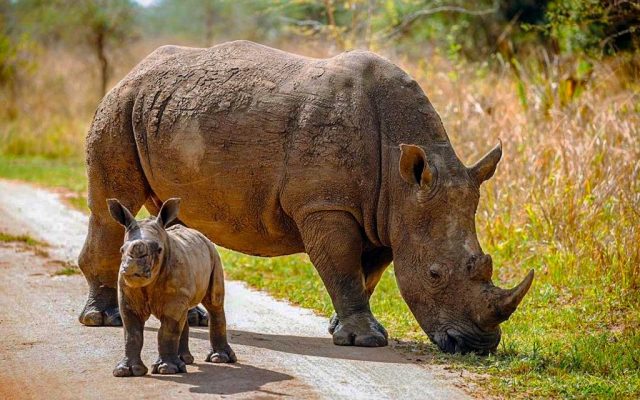
Located conveniently along the road route between Kampala and Murchison Falls National Park, Ziwa Rhino Sanctuary is one of the most popular safari stopovers.
For travelers seeking primate encounters, Kibale National Park pairs exceptionally well with Murchison Falls National Park.
Combining Murchison Falls safaris with Queen Elizabeth National Park creates an outstanding wildlife-focused Uganda itinerary.
Continue planning Murchison Falls National Park with Murchison Falls National Park wildlife, Murchison Falls National Park bird watching, and Murchison Falls National Park getting there, or read the main Murchison Falls National Park destination guide.
Overview of Murchison Falls National Park
Murchison Falls National Park is Uganda’s oldest, largest, and arguably most complete safari destination. Covering nearly 3,900 square kilometers, the park protects a remarkable diversity of ecosystems, including open savannah grasslands, acacia woodland, riverine forest, wetlands, and the dramatic Nile corridor that bisects the landscape.
Located in northwestern Uganda, the park forms part of the larger Murchison Falls Conservation Area, which also includes Bugungu Wildlife Reserve and Karuma Wildlife Reserve, creating one of East Africa’s most important wildlife habitats.
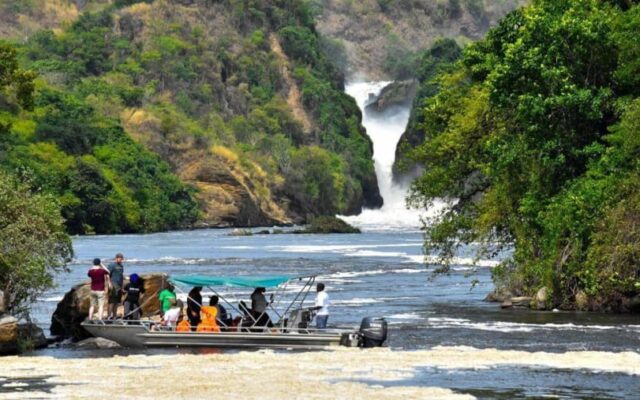
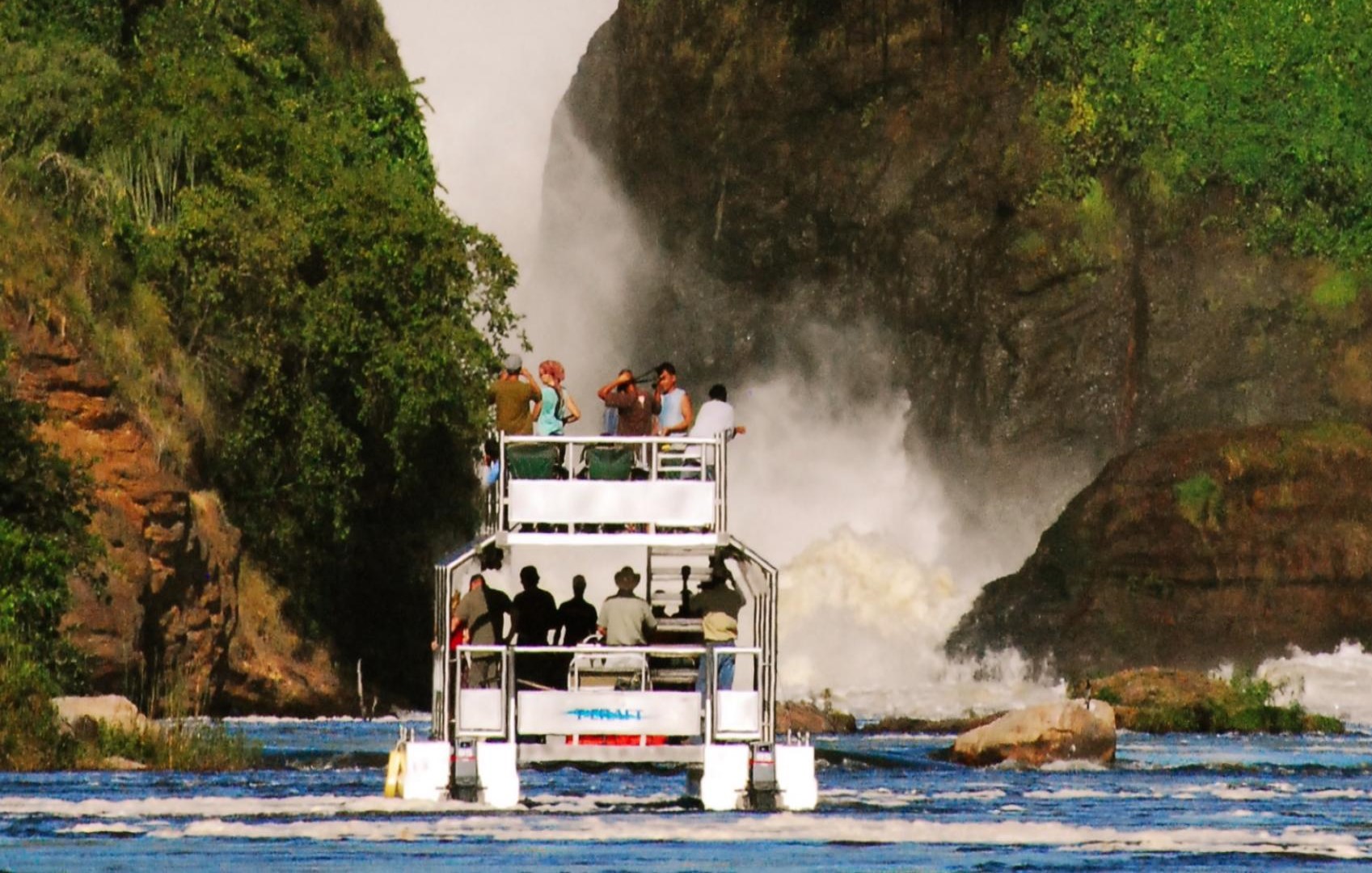
The defining feature of Murchison Falls National Park is undoubtedly the waterfall itself. At Murchison Falls, the Nile—Africa’s longest river—is violently compressed through a narrow rocky gorge only about seven meters wide before crashing downward with immense force. The resulting spectacle creates one of the most dramatic waterfall scenes in Africa and remains one of Uganda’s most iconic natural attractions.
Yet the park offers far more than waterfalls.
For safari travelers, Murchison Falls safaris represent the classic East African wildlife experience. Vast northern savannah plains support healthy populations of elephants, buffaloes, Rothschild’s giraffes, Uganda kobs, hartebeests, waterbucks, lions, leopards, hyenas, and numerous smaller mammals.
The Victoria Nile creates an entirely different safari ecosystem. Boat cruises reveal concentrations of hippos, Nile crocodiles, elephants drinking along the riverbanks, buffaloes grazing nearby, and extraordinary birdlife including kingfishers, herons, bee-eaters, storks, fish eagles, and the iconic shoebill in selected wetland areas.
This combination of land-based wildlife viewing and river safari experiences makes Murchison Falls safari tours exceptionally rewarding.
Historically, Murchison Falls National Park has played a central role in East African tourism. The area attracted explorers, conservationists, and filmmakers long before modern safari tourism developed. Even today, it remains one of Uganda’s strongest wildlife tourism pillars.
The park is divided broadly into northern and southern sectors, connected by ferry crossings and road networks.
Northern Sector
The northern sector contains the park’s premier game viewing areas, particularly the famous Buligi game tracks where travelers encounter large concentrations of classic savannah wildlife.
This region is best known for:
- Game drives
- Lion sightings
- Rothschild’s giraffes
- Elephant herds
- Buffalo concentrations
- Open wildlife photography opportunities
Southern Sector
The southern side offers excellent access to the falls, forested landscapes, river viewpoints, and key accommodation areas. It also provides convenient access for travelers entering by road from central Uganda.
Several premium safari lodges and access routes are located here.
Murchison Falls National Park is especially attractive because it integrates beautifully into broader Uganda safari itineraries. Travelers often combine this destination with , , , and .
For first-time safari travelers, Murchison Falls safaris often provide the most balanced introduction to Uganda’s wildlife diversity.