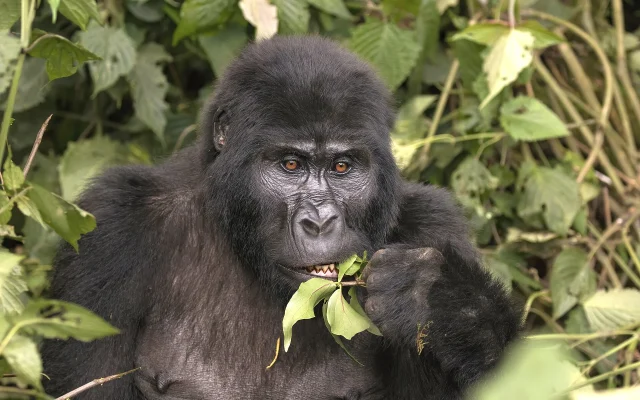
Lake Mutanda is one of the most atmospheric lake destinations in southwestern Uganda, set in Kisoro District below the Virunga volcanoes and close to both Bwindi Impenetrable National Park and Mgahinga Gorilla National Park. For travelers planning Uganda gorilla safaris, Lake Mutanda offers a rare combination: quiet water, island scenery, volcano views, canoe experiences, birding, cultural encounters, and practical access to the Rushaga, Nkuringo, and Mgahinga trekking areas.
The lake feels different from Uganda’s bigger safari landscapes. Instead of open savannah or dense rainforest, visitors find a highland basin of cultivated hills, papyrus edges, small islands, fishing canoes, misty mornings, and the dramatic silhouettes of Mount Muhabura, Mount Gahinga, and Mount Sabyinyo. This makes Lake Mutanda tours especially valuable before or after gorilla trekking, when travelers often want scenery, rest, photography, and a softer pace.
Lake Mutanda works well for honeymooners, photographers, birders, active walkers, families with older children, and travelers who want a scenic base near Kisoro rather than a simple overnight stop. It can be built into a short gorilla itinerary from Kigali, a longer Uganda safari from Entebbe, or a southwestern circuit linking Lake Bunyonyi, Bwindi, Mgahinga, Queen Elizabeth, and Kibale.
Quick Facts About Lake Mutanda
| Feature | Details |
|---|---|
| Location | Kisoro District, southwestern Uganda |
| Nearest Town | Kisoro |
| Approximate Altitude | About 1,800 meters above sea level |
| Landscape | Freshwater lake, islands, terraced hills, Virunga volcano views |
| Main Activities | Canoeing, boat rides, island visits, birding, village walks, relaxation |
| Best For | Gorilla safari extensions, photography, quiet retreats, volcano scenery |
| Nearby Parks | Bwindi Impenetrable National Park and Mgahinga Gorilla National Park |
| Common Access | Road transfer from Kisoro, Kigali, Kabale, Bwindi, or Entebbe/Kampala |
Overview of Lake Mutanda
Lake Mutanda lies in Uganda’s far southwest, a region where highland farms, volcanic mountains, bamboo forest, and gorilla habitat meet in a compact but deeply varied landscape. The lake is often described as a base for gorilla trekking, but that understates its appeal. It is a destination in its own right, especially for travelers who enjoy slow mornings, clean mountain air, reflective water, and wide views across the Virunga range.
The lake is freshwater and island-dotted, with shorelines shaped by steep cultivated hills and small communities. Local canoes move between landing points, lodges look toward the volcanoes, and weather changes quickly enough to keep the scenery alive. A clear morning can reveal sharp views of the volcanic chain; by afternoon the same view may soften into mist and cloud, giving photographers a completely different mood.
For safari planning, the strongest advantage is location. Lake Mutanda sits close to Kisoro town and is convenient for Mgahinga gorilla trekking, golden monkey tracking, volcano hiking, and southern Bwindi sectors such as Rushaga and Nkuringo. This makes it an excellent overnight base when permits, lodge choice, and route design align.
Travelers also choose Lake Mutanda safaris because the experience feels intimate. The lake is scenic without feeling overbuilt, active without being noisy, and close to major wildlife highlights without losing its quiet highland character. It suits travelers who want a destination that adds texture to a gorilla safari rather than simply filling time between transfers.

Why Visit Lake Mutanda?
Exceptional Virunga Volcano Scenery
The lake’s defining visual feature is the line of volcanoes rising beyond the water. Mount Muhabura, Mount Gahinga, and Mount Sabyinyo are part of the wider Virunga landscape shared by Uganda, Rwanda, and the Democratic Republic of Congo. From the lake, they create one of Uganda’s strongest scenic backdrops, especially at sunrise and during breaks in the cloud.
A Strong Base for Gorilla Safaris
Lake Mutanda is practical as well as beautiful. Depending on the lodge and routing, it can work for travelers trekking in Mgahinga, Rushaga, or Nkuringo. That flexibility matters because gorilla permits are limited, and the best itinerary often depends on which trekking sector has availability at the time of booking.
Quiet Water Experiences
Canoe rides and boat trips are the signature activities. These are not high-speed lake excursions; they are slow, scenic experiences that let travelers absorb the islands, birds, villages, and mountain light. The mood is especially good after a demanding trek, when an easy afternoon on the water can feel like the right reward.
Highland Culture and Village Life
The landscape around the lake is lived-in. Farms climb the slopes, markets supply Kisoro, and community visits can introduce travelers to local livelihoods, craft, food, and stories when arranged respectfully through guides or lodges. Cultural experiences should be chosen carefully so that hosts benefit directly and visits remain dignified rather than staged.
A Softer Alternative to Busier Lake Stops
Lake Bunyonyi is better known, but Lake Mutanda offers a more remote-feeling atmosphere and stronger volcano views. Many travelers do not need to choose one over the other; longer itineraries can include both, using Lake Mutanda for gorilla access and Lake Bunyonyi for extended relaxation near Kabale.
Things to Do at Lake Mutanda
Canoeing and Boat Trips
The most natural way to experience Lake Mutanda is from the water. Canoe trips move between bays, islands, and fishing areas, giving travelers low-level views of the shore and volcanoes. Boat trips can be timed for photography, sundowners, birding, or gentle exploration after a morning activity.
Island Visits
Lake Mutanda has a number of small islands, some inhabited and some better appreciated from the water. Guided island visits can add local history, viewpoints, birding, and cultural context. Because island access and community expectations vary, it is best to arrange these visits through a lodge or local guide who understands current conditions.
Bird Watching
The lake margins, reeds, gardens, and nearby forests support rewarding birding. Common sightings may include kingfishers, weavers, kites, herons, ibises, and crested cranes, while dedicated birders can combine the lake with Mgahinga, Echuya Forest, and Bwindi for richer Albertine Rift variety.
Gorilla Trekking Extensions
Many visitors stay at Lake Mutanda because it makes the gorilla trekking experience feel more complete. A typical plan may include arrival from Kigali or Entebbe, an overnight by the lake, gorilla trekking in Mgahinga or southern Bwindi, and a second night for recovery and scenery before continuing to Lake Bunyonyi, Queen Elizabeth, or Kibale.
Volcano and Highland Walks
Active travelers can use the wider Kisoro area for volcano hiking, village walks, and viewpoint hikes. These activities require sensible pacing because the altitude, steep slopes, and changeable weather can make short distances feel more demanding than expected.
Best Time to Visit Lake Mutanda
Lake Mutanda can be visited year-round, but the most comfortable travel periods usually align with Uganda’s drier trekking seasons from June to September and December to February. During these months, roads and trails are generally easier, volcano views are often clearer, and gorilla trekking conditions tend to be less muddy.
The wetter months from March to May and October to November bring greener hills, fewer visitors, dramatic skies, and excellent photographic atmosphere. Rain can interrupt lake activities and make rural roads slower, but it also gives the highlands their deep color and misty character.
Because Lake Mutanda is a highland destination, evenings and early mornings can be cool. Travelers should pack layers, rain protection, and footwear that handles mud. Even in the drier months, weather can change quickly around the Virunga Mountains.
How to Get to Lake Mutanda
{{SEC_GETTING_THERE}}
From Kisoro
Kisoro is the nearest main town and the practical gateway for Lake Mutanda. Transfers from town to lakeside lodges are usually short by regional standards, though road conditions can vary with rain and the exact lodge location.
From Kigali
For many premium short gorilla safaris, Kigali offers an efficient access route into southwestern Uganda via the Rwanda border. This can reduce total driving time compared with starting in Entebbe, but border formalities, visa requirements, and vehicle logistics must be planned carefully.
From Entebbe or Kampala
Overland travel from Entebbe or Kampala is a long but scenic journey through Uganda’s southwest. It works well for travelers building a broader itinerary with Lake Mburo, Queen Elizabeth, Kibale, Lake Bunyonyi, Bwindi, or Mgahinga. Fly-in options to the southwest may reduce road time depending on schedule and routing.
From Bwindi or Mgahinga
Lake Mutanda connects naturally with the southern Bwindi sectors and Mgahinga Gorilla National Park. The right routing depends on the gorilla permit sector, lodge location, weather, and road conditions. A good itinerary avoids unnecessary backtracking and keeps trek mornings practical.
How to get to Lake Mutanda — routes & drive times
Where to Stay Around Lake Mutanda
{{SEC_ACCOMMODATION}}
Accommodation around Lake Mutanda ranges from scenic mid-range lodges and community-minded stays to more comfortable retreats positioned for volcano views and gorilla access. The best choice is not always the most luxurious property; it is the lodge that fits the trekking sector, transfer plan, budget, and desired atmosphere.
Travelers trekking gorillas should prioritize logistics. A beautiful lodge can become inconvenient if it creates a very early start on rough roads. For relaxed lake time, however, a quieter location with strong views may be worth a slightly longer transfer.
Honeymooners and photographers often prefer properties with direct lake outlooks, verandas, canoe access, and clear sunrise or sunset angles. Active travelers may value easy access to guided walks, canoe trips, village visits, or Mgahinga activities.
Lake Mutanda and Gorilla Trekking
The relationship between Lake Mutanda and gorilla trekking is one of the main reasons the lake belongs in serious Uganda safari planning. Southern Bwindi and Mgahinga are both close enough to make the lake a useful base, but each permit sector has its own logistics. Rushaga and Nkuringo sit in the southern part of Bwindi, while Mgahinga is approached from the Kisoro side. Travelers should not assume that any lodge works equally well for every trek.
Gorilla permits are issued for specific areas and dates. Once the permit is confirmed, accommodation should be matched to that sector. Lake Mutanda can be excellent when the route is planned correctly, particularly for travelers who want to combine a major wildlife experience with one of the most beautiful lake settings in Uganda.
A strong plan may include a lake arrival day, a trek day, and a recovery day. This avoids turning Lake Mutanda into a quick photo stop and lets travelers enjoy the destination properly. Canoeing, birding, and quiet meals by the water become part of the safari experience rather than an afterthought.
Nearby Destinations
Lake Mutanda combines naturally with Mgahinga Gorilla National Park, Bwindi Impenetrable National Park, Kisoro, Lake Bunyonyi, Queen Elizabeth National Park, and Kibale National Park. It is especially strong in itineraries that use the southwest as more than a single gorilla stop.
Mgahinga Gorilla National Park
Mgahinga is the most natural wildlife pairing for Lake Mutanda, adding gorilla trekking, golden monkey tracking, volcano hiking, and Virunga mountain scenery.
Bwindi Impenetrable National Park
Southern Bwindi sectors such as Rushaga and Nkuringo combine well with Lake Mutanda when the lodge and permit logistics are matched correctly.
Kisoro
Kisoro town is the practical gateway for Lake Mutanda, Mgahinga, local markets, cultural visits, and cross-border safari routing.
Lake Bunyonyi
Lake Bunyonyi extends the highland lake theme with island scenery, relaxation, and an easy link toward Kabale and broader southwestern circuits.
Queen Elizabeth National Park
Queen Elizabeth adds savannah wildlife, boat safaris, and Rift Valley scenery after the gorilla and lake landscapes of the southwest.
Kibale National Park
Kibale is a strong primate extension, adding chimpanzee trekking and Fort Portal crater-lake scenery to a Lake Mutanda and gorilla itinerary.
Suggested Lake Mutanda Itinerary Ideas
Two-Night Gorilla Extension
Arrive at Lake Mutanda, settle into the highland scenery, trek gorillas the next day, and spend the following afternoon on a canoe ride or viewpoint walk. This is the minimum style that lets the lake contribute more than accommodation.
Southwest Scenic Circuit
Combine Lake Mutanda with Mgahinga, Bwindi, Kisoro, and Lake Bunyonyi for a scenic highland journey built around gorillas, golden monkeys, volcanoes, lakes, and cultural encounters.
Primate and Wildlife Safari
Link Lake Mutanda with Queen Elizabeth and Kibale to create a journey that moves from gorillas and volcano scenery to savannah wildlife, boat safaris, chimpanzee trekking, and Fort Portal crater lakes.
Planning Tips for Lake Mutanda Tours
Book gorilla permits before finalizing the lodge. Pack layers because Kisoro highland evenings are cool. Use realistic drive times, especially in wet weather. Allow space in the itinerary for rest because altitude and trekking can be tiring. Choose community visits carefully so that local people benefit from the experience.
For photographers, the lake rewards patience. The best images often come from waiting through changing weather rather than chasing too many activities. For honeymooners, a slower two- or three-night stay can feel far more memorable than a rushed overnight stop.
Lake Mutanda is not a mass-market resort lake. Its value lies in atmosphere, access, scenery, and a sense of place. Travelers who approach it with enough time and the right expectations usually find it one of the most memorable parts of southwestern Uganda.
Lake Mutanda FAQs
- Is Lake Mutanda worth visiting?
-
Yes. Lake Mutanda is one of Uganda’s most scenic highland lakes, with Virunga volcano views, canoe trips, island scenery, birding, and excellent access to gorilla trekking in Mgahinga and southern Bwindi.
- Where is Lake Mutanda located?
-
Lake Mutanda is in Kisoro District in southwestern Uganda, close to Kisoro town, Mgahinga Gorilla National Park, and the Rushaga and Nkuringo sectors of Bwindi Impenetrable National Park.
- Can I use Lake Mutanda as a base for gorilla trekking?
-
Yes, when the itinerary is planned around the correct permit sector. Lake Mutanda can work well for Mgahinga gorilla trekking and for southern Bwindi sectors such as Rushaga and Nkuringo, depending on lodge location and road conditions.
- What are the best things to do at Lake Mutanda?
-
Popular activities include canoeing, boat trips, island visits, bird watching, photography, village walks, lakeside relaxation, and combining the lake with gorilla trekking, golden monkey tracking, or volcano hiking.
- When is the best time to visit Lake Mutanda?
-
The lake is open year-round, but June to September and December to February are usually preferred for clearer views and easier trekking conditions. Rainier months are greener and quieter but can make roads and trails muddier.
- How do you get to Lake Mutanda?
-
Most visitors reach Lake Mutanda by road from Kisoro, Kigali, Kabale, Bwindi, Mgahinga, or Entebbe/Kampala. Kigali can be efficient for short gorilla safaris, while Entebbe works well for longer Uganda circuits.
- Is Lake Mutanda better than Lake Bunyonyi?
-
They offer different strengths. Lake Mutanda is closer to Kisoro, Mgahinga, and southern Bwindi and has strong volcano views, while Lake Bunyonyi is better known for extended relaxation near Kabale. Many longer itineraries can include both.