Wildlife Grey-cheeked Mangabey

Conservation status — Grey-cheeked Mangabey

Grey-cheeked mangabey conservation in Uganda is a story of forest protection within a globally Least Concern species. Populations remain secure inside Kibale, Budongo, and Mabira where habitat blocks persist, yet lowland rainforest loss, bushmeat hunting, and forest fragmentation outside reserves make community tourism and Uganda Wildlife Authority management especially important for this fruit-dependent primate.

Grey-cheeked mangabey conservation in protected Uganda lowland rainforest Kibale
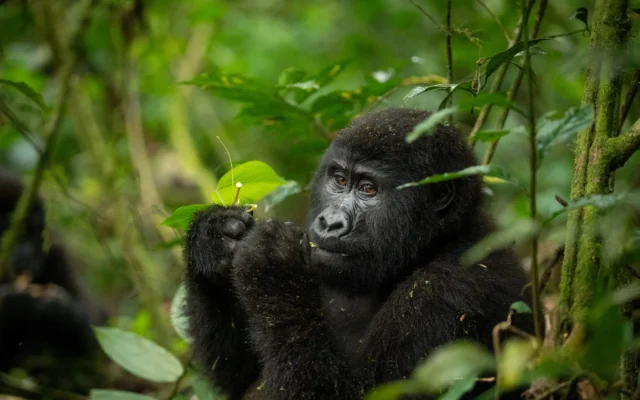
Protected lowland rainforest — grey-cheeked mangabey conservation depends on Kibale, Budongo, Mabira, and community projects like Bigodi.

Grey-cheeked mangabey conservation in Uganda is a story of forest protection within a globally Least Concern species — locally secure inside major reserves yet vulnerable to the habitat loss and bushmeat hunting that threaten all rainforest primates across equatorial Africa. Populations at Kibale National Park, Budongo Forest Reserve, and Mabira Forest Reserve benefit from decades of management, but the forests outside park boundaries continue to contract. Connect this page to habitat ecology, where to see mangabeys, and safari experiences that fund protection.

Global Conservation Status

The IUCN Red List classifies grey-cheeked mangabeys as Least Concern, citing a wide central African distribution, large protected-area populations, and absence of range-wide decline severe enough to warrant a higher threat category. Estimates across the Congo Basin and East African margins suggest stable or locally abundant populations where mature lowland rainforest persists.

Least Concern does not mean invulnerable. The category reflects current range-wide assessment, not immunity from regional extinction. Island populations in shrinking forest fragments — including areas outside Uganda's major reserves — face elevated risk from hunting and isolation even while Kibale troops remain numerous.

Uganda's Conservation Context

Uganda shelters mangabeys in some of East Africa's best-managed rainforest blocks. Kibale National Park, gazetted in its modern form in 1993, protects 795 square kilometres of moist evergreen forest with Uganda Wildlife Authority ranger patrols, research stations, and tourism revenue supporting operations. Budongo Forest Reserve, managed through a combination of National Forestry Authority oversight and research partnerships including the Budongo Conservation Field Station, maintains mahogany forest critical for chimpanzees and mangabeys alike.

Mabira Forest Reserve — Uganda's largest moist evergreen block east of the Nile — has faced political pressure for degazettement and agricultural conversion, making its continued protection a national conservation flashpoint. Mangabeys, along with pied hornbills and African grey parrots, depend on Mabira's survival as a habitat island between Kampala and the Victoria Nile corridor.

Habitat Loss and Fragmentation

Lowland rainforest in Uganda has contracted through agricultural expansion, timber extraction, charcoal production, and infrastructure development. Forest fragments smaller than roughly 500 hectares rarely support viable mangabey troops long-term — populations blink out through hunting, inbreeding, and loss of fruit-tree diversity. Connecting corridors between Kibale, private forest patches, and community-managed wetlands are active conservation priorities.

Bigodi Wetland Sanctuary demonstrates a complementary model: KAFRED (Kibale Association for Rural and Environmental Development) manages a community reserve on Kibale's margin where fig-dominated forest persists because tourism revenue funds patrols, schools, and guide employment. Mangabeys using Bigodi's corridor are direct beneficiaries of community conservation economics.

Bushmeat Hunting

Bushmeat hunting remains the most direct primate threat across central Africa. Mangabeys are not primary commercial bushmeat targets compared with duikers or pigs, but snares set for terrestrial game kill arboreal primates indiscriminately. Wire snares in Kibale and Budongo have injured chimpanzees and monkeys; anti-poaching patrols and snare removal programmes are ongoing Uganda Wildlife Authority priorities.

Tourism creates economic alternatives. A Kibale chimpanzee permit generates more sustained revenue than a one-time bushmeat sale — a calculus that community education and employment reinforce when lodge staff, guides, and craft sellers depend on primate tourism.

Research and Long-term Monitoring

Kibale is one of the world's most studied tropical forests. Decades of primate research — including mangabey ecology within broader community studies — inform management decisions on trail routing, tourism group sizes, and habitat zoning. Budongo's research station similarly contributes long-term data on forest health and primate populations. This science base distinguishes Uganda's forests from less-monitored central African blocks where population trends are poorly documented.

Tourism as a Conservation Tool

Responsible mangabey tourism funds protection through multiple channels:

  • Park entry fees: Uganda Wildlife Authority revenue supporting Kibale and Semuliki ranger operations
  • Chimpanzee permit fees: Indirect mangabey benefit through forest protection on shared trails
  • Bigodi community fees: KAFRED income funding wetland patrols and local schools
  • Budongo ecotourism: Forest walk fees supporting reserve management
  • Mabira guide fees: Economic argument for retaining forest against conversion pressure

Travellers who visit these sites on licensed safaris, pay official fees, and follow guide instructions participate directly in conservation economics.

Forest Restoration and Tree Planting

Reforestation programmes around Kibale and in the Albertine Rift aim to reconnect fragmented forest and expand fruit-tree availability for frugivorous primates. Native fig propagation is particularly valuable — fast growth, asynchronous fruiting, and keystone ecological role make figs priority species for primate-focused restoration. Community nurseries near Bigodi and Fort Portal supply seedlings for buffer-zone planting.

Climate Change Considerations

Rainforest primates face long-term climate uncertainty — shifting rainfall patterns may alter fruiting phenology, drought stress may affect fig productivity, and extreme weather events may damage canopy structure. Kibale's altitudinal range and moisture regime provide some resilience, but climate adaptation is increasingly part of Uganda Wildlife Authority planning alongside traditional anti-poaching and habitat management.

How Travellers Can Help

  • Book through licensed operators who pay official park and community fees
  • Visit Bigodi on KAFRED-managed walks — community conservation in action
  • Never feed, touch, or harass wild mangabeys
  • Report snares or poaching signs to guides and rangers
  • Choose lodges with documented sustainability commitments near Kibale
  • Share responsible wildlife imagery that emphasises wild behaviour, not staged interaction

Conservation Partners

Uganda Wildlife Authority manages Kibale and Semuliki national parks. National Forestry Authority oversees Budongo and Mabira reserves. KAFRED manages Bigodi Wetland Sanctuary. International research institutions including Makerere University and foreign partnerships support long-term monitoring. Safari operators who route clients through these sites extend the conservation funding chain from permit purchase to lodge employment.

Looking Forward

Grey-cheeked mangabeys will remain secure in Uganda as long as the forests they depend on persist and hunting stays controlled inside reserves. The species is not a headline fundraising icon like the mountain gorilla, but it is a measurable indicator of rainforest health — abundant mangabey troops signal productive fig communities, intact canopy, and functioning anti-poaching systems. Protecting mangabeys means protecting the lowland rainforest ecosystems that also shelter chimpanzees, elephants, and hundreds of bird species on Uganda's western circuits.

Explore mangabey facts, behaviour, and safari experiences that connect your visit to on-the-ground conservation outcomes.

Safari packages to see Grey-cheeked Mangabey

Bookable itineraries below include parks and activities where you are most likely to encounter Grey-cheeked Mangabey in the wild.

View all packages
2 Days Budongo Forest Chimpanzee Safari

2 Days Budongo Forest Chimpanzee Safari

2 days

Uganda · Royal mile & Murchison extension

You visit

Murchison Falls, Entebbe

The Budongo Forest reserve on the southern edge of Murchison Falls is a quieter alternative to Kibale for chimpanzee tracking. Kaniyo Pabidi and Busingiro sectors offer mature mahogany forest, fewer c…

Get a free quote